Saturday, 11 March 2017

Kong: Skull Island review

Kong Skull Island poster.jpg

Director: Jordan Vogt-Roberts
Certificate: 12A
Running time: 118 minutes

Big, dumb...fun?

Kong: Skull Island is the second entry in the planned MonsterVerse, which will eventually bring the giant ape up against Godzilla for an intended release date of 2020, only a year after the release of Godzilla 2. 

For all intents and purposes the story is copying from tropes we have already seen before, set in 1973 just as the Vietnam War has finished. A government sends out a geological expedition to a mysterious, uncharted Island, simply known as 'Skull Island', to help them is British Secret Air Service captain James Conrad (Tom Hiddleston), as well as a discharged army unit from the Vietnam War, which is led by Preston Packard (Samuel Jackson). Also coming along for the ride is Mason Weaver (Brie Larson), a photojournalist.

It isn't long before the expedition goes awry, and the special effects extravaganza and action set-pieces begin to string the film together. Much of it is entertaining at the very least, you can really see where the money went, but so much of it is also unsurprising and falls a bit flat. There is little build up to the appearance of Kong, and although the action is fun there is no tension or subtlety to anything. Despite its flaws, the most recent Hollywood version of Godzilla had tension and plenty of human stakes involved. So much of Skull Island just looks like computer generated characters hitting one another, or humans running away from them.

This isn't helped when none of the characters are particularly interesting or developed in any way whatsoever, no one here has much agency, everyone is just reacting to their surroundings. Brie Larson and Tom Hiddleston have little to do, Samuel Jackson is okay as the manic Colonel who wants to avenge his fallen comrades, but that's all there is to his character. John C Reilly shows up as a castaway on the island, having crashed from air combat in the second world war, but his comic relief character feels a little out of place.

The visual effects and locations are illuminating and really capture the eye, 'Skull Island' feels like a place that is of another world, it's helped by a great use of wide shots to bring everything into focus. You can also tell that they have shot on real locations, and the variety of different creatures is impressive, much like Kong, they all have a scale and wonderment to them.

But it's a double edge sword, there are unfortunately one or two moments when the CGI isn't particularly convincing, and it is painfully obvious that the actors are just standing in front of a green screen.

When all said and done, Skull Island is a decent, popcorn flick that is worth your time on a late night out to the cinema. It's an unashamedly B-movie with monsters, but it could have been so much more. But it does leave me excited for where they go next.

Verdict: 3/5  

Saturday, 18 February 2017

For Honor review


For Honor cover art.jpg

For Honor review (PS4 version)


For Honor is a predominantly online multiplayer game that pits three of history's greatest warriors against one another, Knights, Vikings and the Samurai. With one of the most complex but fun combat systems I have ever played, it's just a few glaring flaws away from being great.

Each of the three warrior factions have four types of soldiers to pick from, these vary in sizes and style, from the larger warriors with big axes who dish out high damage but have little mobility. To smaller disruptive warriors who carry small knives or spears, who have plenty of speed but spill less blood with their attacks. The vast amount of character agency is truly breathtaking, however way you like to play the game, there is something here that will suit your needs.

The combat can be tricky at first, but it will become easy to master. Unlike most fighting games, each button on the control pad has a unique function, any button bashing here will be duly punished, because the combat in For Honor is more like a game of chess, strategy is everything, and learning is a process that requires patience. While the left analogue stick is used to move, the right analogue stick is used to direct where you want to both strike your opponent, and to also parry your opponents attacks. It's clever because it gives the player more agency in a genre that hasn't really evolved much since the mid nineties.

While there is a story mode, the game lives and dies on its multiplayer, there are five modes in total, Dominion which is a 4 v 4 in which players have to capture certain zones on the map, whoever gets the most points wins. Duel which is a traditional 1 v 1, Brawl is a 2 v 2, skirmish is the same as dominion but you don't have any zone points to capture, and finally elimination which is a 4 v 4 deathmatch, the team with the remaining warriors automatically wins.

Overall it's a mixed bag, I prefer to play For Honor as a traditional one on one duel, this is where the intricacy of the combat system comes into play, and where your skill is finely tuned and tested. While fun, Dominion becomes a bit of a mess, where hordes of AI minions can break up the flow of the game. And it also illustrates one of the small weaknesses in the combat system, because while it works perfectly in one on one duels it doesn't when you are fighting multiple opponents, because unless you're lucky you'll have practically no chance of winning whatsoever.

The customisation adds an extra layer to the game, where other multiplayer games can feel forced, For Honor has a reasonably good balance in its currency rewards you pick up. Loot and (sometimes) gear is rewarded after battles, you can then dismantle your rewards to receive iron, which you can then use to upgrade your inventory so it best fits the way you play. The grind in this game is a consequence of actually playing the game, rather than a cause within itself, which makes a nice change from what we're used to.

There are microtransactions, which always cheapens a gaming experience in my opinion, but it's still there if you wish to use them. The character progression system prevents this from being game breaking.  

The story campaign is okay, it's best used as a kind of training mode for the multiplayer, or a way to take a break from the often exhausting online battles. You will play the different types of soldiers in each warring faction as they go from one enemy base to the next, you will climb walls, destroy catapults, take down elephants and horses. But it does get a little repetitive beating the same enemies over and over, with a boss fight to distract you inbetween. After completing it on each of the factions, the chances are you'll probably never return.

The graphics are impressive, the different weapons and armour are visually nice to look at, which can also be said for the maps, with their diverse range of weather conditions. Some maps are like big arenas with plenty of movement, while others take place on narrow bridges and corridors. Which is where some maps bring a little imbalance to the game, and this is where the guard break comes into play, one of the least forgiving mechanics of the combat system, that can disrupt the flow of the game. A guard break is basically a lunge forward that completely dislocates the opponent's guard, it can be countered but it can be cruelly exploited by playing as one of the bigger characters on maps that are narrow and full of ledges that you can be thrown from. It feels cheap compared with the rest of what is an otherwise addictive gaming experience.

Another slight gripe is the network connection, from out of nowhere the game will suddenly lose connection and go back to the main menu, it's worse than any other online game that I have played on the PS4. But it's not a major issue, and it is the exception rather than the rule.

Verdict:

For Honor is bags of fun, even if the amount of content is slender, its saving grace is a combat system like no other, one that you will want to master no matter what joy and frustration it gives you, believe me it will hook you for endless hours. The variety of character styles can't compensate on what is the bare minimum of a complete game, the main story campaign feels a little tacked on, and there is only three warring factions that you can choose from. So while For Honor is a good game, it is far from being stellar, and its long term popularity will ultimately depend on the updates that Ubisoft make for it.

7.5/10- recommended


Tuesday, 31 January 2017

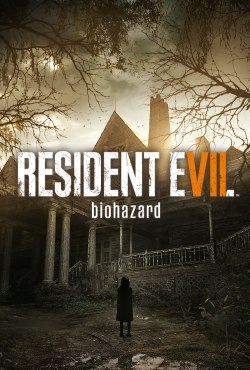
Resident Evil 7 review (PS4 version, no VR)


Resident Evil 7 cover art.jpg


An exceptional, albeit flawed sequel to a series that had somewhat lost its way


Resident Evil 6 was a big disappointment, I say that as an impassioned fan who loves each of the main entries into the series. So I've been anticipating the follow up with some trepidation and hope, the reveal at E3 last year left me curious and excited, but I was also worried about the change to first person perspective. It seemed like Capcom were taking cues from other recent survival horror games such as Outcast and Amnesia. Although I eventually welcomed the change, I was still afraid that it would be one step too far from the series and what I wanted.


But I was wrong, with its item management, save rooms, clever puzzles and backtracking within a contained environment, Resident Evil 7 shares many of the original inceptions of what the series was before the fourth game came along. The story begins when Ethan Winters receives a message from his wife, Mia, who has been missing for three years. The message leads him to a plantation in Dulvey, Louisiana, where he crosses paths with the seemingly manic Baker family, and it's from here that the game begins its twisted journey.


As I said, for the most part, the game's setting is situated in contained environments, where you progress by unlocking doors and solving puzzles, with the obvious enemies stopping you in your tracks. This accommodates the first person perspective wonderfully, not only do you have to be observant (far more than I expected), but it makes the game's atmosphere terrifying (if you think you have the stomach for it, play it with the lights off and the headphones in). Rather than looking in from the outside, you feel like you're playing a bigger role within the game.


As with the earlier games in the series, ammo and health supplies are scant, and have to be managed within a certain limit. The item management is fair and should not cause that much frustration, only twice did I come into any kind of difficulty, and both times it was during boss fights. Veterans of the series will be familiar with the save room and the item box, at certain points in the game they will come to much great relief for the player. But fear not, the game does have a checkpoint system that is pretty generous for this type of game.


It’s only in the last third of the game that the action really ups the ante, from a shotgun to a flame thrower, to a grenade launcher, there is a surprisingly impressive amount of arsenal that will be at your disposal at various points. All of them can used in different ways against different enemies, but as with tradition in a Resident Evil game, try and use them as sparingly as possible.


The shooting works well, don’t expect anything near to the stellar gunplay like that of Battlefield or even Call of Duty. The gunplay in Resident Evil 7 is simple but perfectly fits the purpose of what the game is trying to achieve, in that you’re a character fighting for survival rather than a soldier going into combat.


The sparse but contained way you explore the environments from the early Resident Evil games does return. From the Spencer Mansion to Raccoon City Police Department, one of the greatest and most overlooked aspects of the early Resident Evil games was that the settings were characters within themselves. One half of Resident Evil 7 achieves this, the Baker family plantation is the stuff of nightmares, it’s uninviting and imprisoning, but at the same time you want to know more about it, you want to explore every nook and cranny, not just for the game’s progression but from curiosity point of view as well.


The game’s presentation has a grimy, repellent look to it, the colour palette is dark and devoid of much variety, and it suits the claustrophobic atmosphere that keeps hold for most of the game. However, some of the textures on closer inspection feel dated and very last generation, and while everything is designed proficiently, there is a certain familiarity that makes the game repeat tropes from not only other titles in the series, but other survival horror games in general.


This is most notable in the rather bland enemy designs (sorry no zombies here I'm afraid), which there are far too few of. While the game is more grounded and nowhere near the bombast of some of the other games in the series, it would have been nice to see something a little more surprising and imaginative. In the first part of the game you have to overcome the Baker family, you have the father, Jack, who stalks you with a shovel and doesn't seem like he can be killed. Marguerite, the mother, who you have to stealthily avoid in case you don't want to be killed by the bugs that surround her. And then you have the son, Lucas, to which you have to escape his traps and mind games. All of these are challenging and terrifying, you have very little weaponry, and each of them have to be defeated in different ways, which helps mix the gameplay up.

Which brings me to the boss battles, a staple of the series right from the beginning, and to be honest it's a mixed bag here. None of them are particularly smart or reach their potential, and some are just damn right annoying. However, they do provide a tough challenge and while the premise doesn't always work, the set up and the eventual progression is rewarding.

I completed the game in under nine hours which is about average for a Resident Evil game, but once you have completed it you unlock the madhouse difficulty, in case you want an extra challenge. And if you don't fancy going back for an extra challenge, the chances are you will want to go back for some of the items and files that you might have missed the first time round.


Verdict

Resident Evil 7 is a fantastic game and one that erases the mistakes of the sixth entry in the series and goes back to its survival horror roots, it works well as both a semi-reboot and a continuation within the series lore. But it has to be said that the first two thirds of the game is far superior to the last third, towards its conclusion the game becomes far too linear and a bit of a lull. The final boss is unforgivably bad and the eventual ending is also a bit anti-climatic.

But overall, I'd recommend the game to anyone, whether you're new to the series or a fanboy, it's definitely a buy from me. It's just a few flaws away from being a true classic, but its wet my appetite for what they will offer next.

8/10


Saturday, 17 December 2016

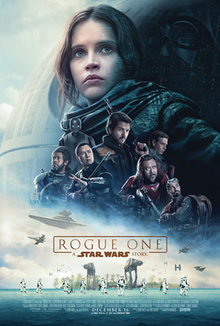
Rogue One: A Star Wars story review


Rogue One, A Star Wars Story poster.png

Director: Gareth Edwards
Running time: 2 hours and 13 minutes


Despite some glaring flaws, Rogue One is one of the best in the Star Wars series 

Rogue One is the first stand alone in the now Disney owned Star Wars franchise, taking place just before the 1977 original.

In a nutshell, the story is about an imperial pilot who defects to the rebellion, bringing with him a message about the whereabouts of the plans to a newly built weapon called the Death Star, from one of its senior designers, Galen Erso (Mads Mikkelson). The message ends up in the hands one of the most extreme (but separate from the Rebel Alliance) fighters in the rebellion against the Empire, Saw Gerrera (Forest Whitaker).

To find out what the message is, the Rebel Alliance recruit one of his former associates and Galen Erso's long lost daughter, Jyn (Felicity Jones). She is teamed with Cassian Andor (Diego Luna) and a reprogrammed imperial droid called K-2SO (who is wonderfully voiced by Alan Tudyk). As the story moves on, another two join the group, blind warrior Chirrut Imwe (Donnie Yen) and mercenary Baze Malbus (Wen Jiang). The main antagonist in the story is Director Krennic (Ben Mendelsohn), who oversees the Death Star, and who was also the one responsible for taking Galen Erso away from his family to help build the planet destroying weapon.
  
Rogue One is certainly one of the darkest Star Wars movies, the violence while not explicit, feels very physical and alive. Unlike most of the violence in the previous films in the series, every character action seems to have consequence in Rogue One, which builds to a larger scope within the universe.

And there is plenty of scope in this film, far more than I anticipated, with many different locales and planets visited. The cinematography is beautiful, the universe feels like a living and breathing setting, and without doubt it is visually immersive. However, much of what you see is often just backdrop, while the world of Star Wars is widened it often feels shallow and unexplored.

The characters work well as a team, there is clear agency and motivation, the performances are all good at the very least. But it's in the characterisation that Rogue One falls short, because aside from Jyn Erso, none of the characters have any depth, they are all kind of just there to serve the story and nothing much else. Which is a real shame because Star Wars is absolutely at its best not in its fantastic action set-pieces, but in the characters we want to share the universe with.

The pace of the film was slower than I expected, as the first two thirds slowly build up to the wonderful final battle in the last third. The action is far more creative than anything seen in the Force Awakens (which was very conservative in both its creativity and action). The spaceship fights are particularly well choreographed, not only is there a dynamic range of camera angles to show the scale of the fighting, but it's edited in a way that makes sure you know what's actually going on, which was not only a bit of a problem with some of the other films in the series, but a problem with most space battles in film generally.

Another slight negative is the score, it's not noticeably bad or good, it's just passable at best, which shouldn't be the case with a Star Wars film, with its catalogue of wonderful music in its archive.

Familiar characters from the original trilogy do return, some work better than others, some are nothing more than easter eggs. Darth Vader returns in an unimportant but rather imposing role, which I really liked because he isn't the distraction in the film that I feared he would be. One particular scene will remind you of why he's one of the most iconic villains of all time.

Verdict:

While we might already know where the film's ultimate fate is, Rogue One is executed brilliantly, acting as a transition to the very first Star Wars film, while surprisingly giving it added weight and context, rather than disgracing and undercutting it as I originally feared. I would without question recommend you go see Rogue One, even if you are not a Star Wars. I'd rank it joint third in my all time favourite Star Wars movie list.


8/10
B+


Wednesday, 16 November 2016

Arrival review


Arrival, Movie Poster.jpg

Director: Denis Villeneuve
Running time: 116 minutes

A wonderfully poignant Sci-fi movie that dares to ask questions


Arrival is a rare, contemporary Sci-fi film that is small in scale but grand in its premise. It challenges the audience into wondering what could be better achieved if humanity were to set aside its differences and communicate with one another, instead of always turning to conflict. It also helps that the film never falls into the trap of being preachy and taking its audience for granted.

When twelve bizarre, extraterrestrial spaceships (otherwise known as shells) land on Earth, the film centres on one that has landed in rural Montana. To communicate with the mysterious alien beings inside, linguist Dr. Louise Banks is selected to help in trying to communicate with them. She is partnered with Theoretical Physicist Ian Donnelly (Jeremy Renner) and senior military commander, Colonel Weber (Forest Whitaker).

On entering the shells, they come face to face with two of these alien beings that are hiding behind a glass wall. They begin to communicate to them in a strange, symbolic language, so in order for them to understand the purpose of their visit to Earth, they have to find a way to translate it.

While most alien invasion films focus on survival, Arrival succeeds in not initially giving any indication of what the alien beings actually want. The impact on human society is only addressed in small news clips, for better, Arrival is a very contained character story. And the mystery of why they have come to Earth doesn't come into play until the final acts of the film.

Only Amy Adams stands out amongst the casting, her performance is sombre and sympathetic, so we believe and feel her plight and growth as she learns more of what the aliens intentions really are, and the connection she has to it.

The film has a dark tone for the most part, nothing here is particularly polished and shiny. The design of the extraterrestrials are intriguing, and the wait is worth it when you finally get to see them in their entire form. The shape-ship designs are nothing special in design, and rather bland on face value, but it makes their appearance more foreboding and menacing (but in a good way).

Arrival does have some minor problems that hold it back, while the underlining message of human co-operation is valid, by the end of the film its message is very fatalistic. The mid part of the film does begin to feel like it a bit of a lull, and another minor gripe is that some of the plot revelations are left to the audiences own interpretations, but these can be forgiven for the most part.

The ending might also come across as emotionally manipulative, but it's earned because everything in the lead up meant something to the characters involved, and they grew as a consequence of what had happened to them.

Verdict: In a year of few surprises and genuine standouts, Arrival is highly recommended, it's a real gem of serious Science fiction that is thought provoking. which is becoming a rarity these days.

8/10
A


Sunday, 30 October 2016

Doctor Strange review

Doctor Strange, wearing his traditional costume, coming out from a flowing energetic portal, and around him the world and New York turning around itself with the film's cast names above him and the film's title, credits and billing are underneath.

Director: Scott Derrickson
Running time: 115 minutes

Ambitious, stunning, magical, but lacking depth

Doctor Strange is the fourteenth entry in the Marvel cinematic universe, and it's the first one in awhile that feels particularly separate from the others. Not just visually, but because it's also the onscreen introduction to a new superhero within the Marvel pantheon. Stephen Strange (Benedict Cumberbatch) is a brilliant if arrogant neurosurgeon who can't control the nerves in his hands after a car crash.

Unable to do the thing he loves, he struggles to find meaning to his life, so he heads to Kamar-Taj, on the advice of a man who recovered from a major life threatening spinal injury. On arrival he meets a sorcerer called 'The Ancient one' (Tilda Swinton), who teaches him the ways of the mystic arts. Where he will eventually have to stop Kaecilius (Mads Mikkelson), a student who betrayed her and stole the pages of a ritual from a forbidden book, that can open the Dark Dimension where time stands still.

Doctor Strange is visually stunning and colourful, the use of magic while limited in scope is wonderful to look at. Magic is often used as nothing more than a plot device in most fantasy films, but in Doctor Strange it has a purpose that is central to the plot and the character, which I really liked.

Much of the action scenes take place in the cityscapes of New York (and to a lesser extent London and Hong Kong) in an alternate dimension. Through the manipulation of magic, these cities bend and twist together creating jaw dropping visual effects. These action scenes are great to look at, but sometimes feel a little weightless because Strange seems to overcome his enemies relatively easily, there's also little tension because the villain, Kaecilius, isn't particularly interesting and has no real foreboding presence. And like other MCU villains, he isn't developed very much to really care about.

Benedict Cumberatch is perfectly cast as the lead, but the character's progression, much like the story, is rushed and contrived. He learns his powers far too quickly, taking away any potential character development that is sorely missing. Rachel McAdams is underused as the love interest, seeming to appear every time the plot requires her to show up. However, the chemistry between her and Cumberbatch works very well, their characters do come across as a believable couple.

Aside from the finale, the overall structure is typical of any superhero origin film, and doesn't deviate from anything that has already been done before. There are touching scenes between Strange and the 'The Ancient One' that bring a certain levity and philosophical identity that is absent from most of the other MCU films. There is also a thoughtful message about the need to look beyond our own materialistic needs and self greed, which was surprising for this kind of film.

Doctor Strange is an above average MCU film, with plenty of fun and entertainment. The ideas, ambition and the visuals are worth the ticket price alone. But I'm not sure if it's something that will be particularly well remembered in another five years or so.

Verdict: 7/10, B-
Recommended


Monday, 17 October 2016

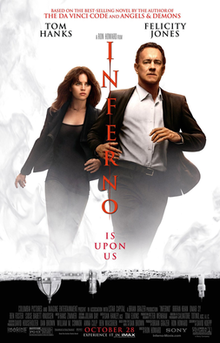
Inferno Review


Tom Hanks as Robert Langdon with Felicity Jones as Sienna Brooks running together, with the film's title is in the middle between them, the film's director's name above and the billing and credits underneath them.


Director: Ron Howard
Running time: 121 minutes
certificate: 12A 

The previous movie adaptations of Dan Brown's best selling novels, The Da Vinci Code and Angels and Demons were passable entertainment without being particularly memorable films. However, they were saved by interesting and topical subject matters, particularly The Da Vinci Code. Unfortunately, with a threadbare plot and unexciting action, the latest Robert Langdon thriller is the worst of the trilogy.

The story begins with Robert Langdon (Tom Hanks) waking up in a hospital in Florence with bullet wounds to his head, he can't remember what has happened to him or how he ended up in the city. When an assassin tries to kill him he escapes with Dr. Sienna Brooks (Felicity Jones), when they get back to her apartment he finds a device among his belongings that shows a painting based on Dante's Inferno.

From there Langdon has to follow the clues to stop a virus created by bio-engineer Bertrand Zobrist (Ben Foster) from being unleashed on the world to prevent overpopulation.

Much like the books, the plot jumps from one place to the next as the characters explain everything to one another depending on where they are. This doesn't work well in a film where the characters are not overly interesting, and where there is little time to allow the story to breathe. While the topic of overpopulation is a worthy one, in this film it isn't much more than a plot device for the characters to react to.

The action scenes are okay, but because Robert Langdon isn't an action hero there's little excitement involved, there's nothing to really keep you on the edge of your seat. The finale is good but rather uninspiring and predictable. This could be all forgiven if the central mystery is gripping but it isn't, it just becomes boring quite quickly.

The performances don't particularly standout, Tom Hanks is well cast as Robert Langdon but Felicity Jones is a bit wooden as the female companion, the script doesn't much help. It isn't noticeably bad, it's just full of stiff dialogue that doesn't flesh out any of the characters or create any form of tension.

A number of twists and revelations spring up from nowhere, there was one particular twist that I didn't see coming, but it doesn't make up for a rather insipid film and cliched ending, which has been changed from the book rather unnecessarily.

Other positives? As with the previous Dan Brown adaptations, the locations are wonderfully shot and everything is visually rich and aesthetically nice to look at, it's always a pleasure when a film uses real locales. But there's nothing much here that is worth buying a ticket for, unless you're an avid Dan Brown fan, I can't recommend this film.

Wait for a rental.

Verdict: D
2.5/5  

Resident Evil Requiem review (PlayStation 5 version)

Resident Evil Requiem is the ninth mainline entry in the series, and for me it had a lot to live up to as the successor to Resident Evil Vi...