Sunday, 28 June 2020

The Last of us Part 2 review


TLOU P2 Box Art 2.png

I need to make a confession, I never loved the first Last of Us, I thought it was a competent action game with exemplary graphics, but I never felt attached to the characters by the time the credits rolled. I appreciated its ambition and the ending was genuinely thought provoking, unlike most other video games. So I was not initially hyped for The Last of Us Part 2, but that quickly changed as the release date was drawing closer, so I ended up pre-ordering a copy, which is something I hardly ever do.

The bulk of the game is set four years after the first, where the main characters, Ellie and Joel, have settled in a walled off town called Jackson, in the state of Wyoming. From the get go there seems to be a partial sense of normality that has returned to the world, at least in Ellie's own life. The narrative takes a dramatic turn of events early on, leading Ellie to leave her relative comfort and journey to the city of Seattle searching for vengeance. It's not long after you arrive that the plot begins to twist and turn as you learn more about two factional groups, who are vying for control over what is left of a city that's been ravaged by nature and the loss of humanity.


In gameplay terms, little has changed, although I rather enjoyed the inclusion of a jump button. So there's far more platforming than I expected, which was a nice surprise. Outside of one particular area of Seattle, the game is relatively linear as you go from one point to the next, but the areas you explore are far bigger and multi layered compared to those in the first game. I loved exploring every nook and cranny for supplies, especially after a heavy gun fight.

Because of the relative scarcity of ammo and supplies, I tried to play as stealthily as possible, which is a lot easier said than done. So I ended up shooting my way through enemies far more than I intended. The combat can be clunky and a little awkward, and nothing more than just functional. However, it's always engaging because the feel of the weapons is extraordinary satisfying. On the standard difficulty I found myself with just enough ammo and supplies between each area, I never once felt overpowered or too desperate. The melee combat is rather simple but effective in its raw violence and tension. There is nothing elaborate about it, it basically boils down to you timing a dodge and then countering by hitting the square button. Every connecting hit you make is extremely gratifying. Word of warning, melee combat only works well when you are equipped with a weapon such as a baseball bat or a machete. Using your fists or a standard knife takes longer and only works when you are confronting one enemy at one particular moment. Like the guns, these melee weapons can be upgraded, but their durability does not last long. 

The enemy AI is challenging for the most part, human enemies have an almost perfect aim, and they do try and flank you when you are pinned back. But it was the infected that are the most challenging foes. If you make one mistake in a roomful of them, prepare to be aggressively rushed down, and once one of them locks onto you it can be a excruciatingly frustrating to fend them off. There are different enemy types for both the infected and the human cannon fodder, but outside of the way they look and the factions they belong to, the human enemies are generally carbon copies of each other. The various forms of infected will require a little more strategy to kill from one type to the next. One of the most deadly are the clickers, who will kill you the second they grab hold of you. It is a huge credit to the design team that they look so disgusting, and just thinking about them makes my skin crawl. 

Combat is made easier by a typical upgrade system that you use via the supplies you collect. It comes in two forms, on the one hand you can upgrade your character's more personal traits such as their health bar or crafting speed. The other side is to do with the weapons, of which you can refine and retool at various work benches placed in certain areas you travel through. While the upgrade system is by itself rather basic, it gels exceptionally well with the overall flow of the game, as you will want and need to explore the intriguing environments for supplies in order to survive.

Speaking of the environments, they do for the most part leave you with a variety of choices on how you wish to get past enemies. The environments and overall graphical fidelity of the game is truly gorgeous, the lighting effects and vistas of the exterior locations are the best that I have seen on the PlayStation 4. But these small moments are deceitful and contrast with the majority of the locations you explore. While some of the exteriors of the world look beautiful on first look, the interior locations are grimy and unsettling, the basement of a particular hospital was the most disturbing place I explored.

The Last of Us Part 2 is a rare game that manages to make its locales an intricate part of the story, rather than just a backdrop. You will notice subtle details in each of the rooms you visit that will tell you something about the people that inhabited them. Whether it's the way a living room or bedroom has been decorated, or the placement of a particular item. One small nuance that I really liked was when you use the work bench to upgrade your weapons. As soon as you have selected the upgrade you want, the character will take apart the weapon and then piece it back together. 

Like the first game, The Last of us Part 2 succeeds in being a cinematic experience, and it works most of the time. The cutscenes are finely directed and the performances are wonderful, as well as the animations which can be truly grisly with the realistic violence. This is helped with a consistently good script, a perfect example of this is with the in-game conversations between the characters, which are rather charming, and they provide a little rest-bite between the action.

The first half of the game is a straight up revenge plot, where you take control of Ellie, in the second half of the game you take control of a new character called Abby. When this change in direction occurred I did for a brief moment sigh in disbelief, because the story appears to grind to a halt. But by the end of the game I was more invested in Abby's story arc than that of Ellie, and she has the best action set pieces and the more interesting locations to explore. One particular boss battle reminded me of Resident Evil, which made it all the more enjoyable to defeat.

I don't have too many complaints to make, nothing that stopped my enjoyment of the game. From a gameplay perspective, changing weapons can feel a little finicky. From a story perspective, the pacing can be a little erratic with the narrative switching backwards and forwards, because some of the flashbacks don't initially execute on their premise. But they do become important within the grander context of the narrative.

It took me twenty six hours to complete the game over three days of playing, and I was invested from beginning to end. Which is a sign of an excellent experience, as I said from the outset, I never loved the first game and I was never compelled to go back to it. But having completed the sequel I will return to it at some point over the coming months.

The Last of Us Part 2 is a game that every PS4 owner should experience at some point, but be warned, it is dark and grim, and sometimes gut wrenching. But it's not to be missed, even if you don't find yourself liking the story, there is a great survival horror/action game beneath it all. 


Verdict: 5/5

Saturday, 18 April 2020

Resident Evil 3 review (PS4 version, campaign only)


Resident Evil 3.jpg


In terms of quality, the original Resident Evil 3 would rank amongst the lowest in the series for me, not that I don't like it, it's just the one game in the mainline titles that I've replayed the least. Although it never moved the story forward as one would have expected from a sequel, we did find out the ultimate fate of Raccoon City, and what happened to some of the characters who were in the first Resident Evil. Most notably Jill Valentine who's the lead character, and a member of the elite special forces team, STARS.

I loved the Resident Evil 2 remake, it was my my favourite game of last year, I do however, still think the 1998 version is the definitive title. So I was always looking forward to an inevitable remake of the third game, although I never expected it to release so soon. Having completed it on both standard and hardcore difficulty, it leaves me with similar feelings to those I had of the original.

Resident Evil 3 begins before the events of the second game, just as the zombie outbreak ravages across Raccoon city. The main antagonist, Nemesis, shows up from the very beginning this time, chasing Jill through a block of apartments until she manages to escape onto the streets. Where a significant chunk of the first half of the game takes place.

From then on the game doesn't deviate too much from the typical Resident Evil formula, as you collect items that allow you to progress further. The burning chaos of the Raccoon city streets provides for a great opening location, and from a visual point of view the game looks splendid throughout as you go from one new area to the next, (the lighting effects mesh particularly well with the dark aesthetic of the locales).

For me it's the exploration in these games that I like the most, I love checking every nook and cranny, and finding things that will be useful for my survival. This is one of the first gripes I have with the game, as good as the locations are to explore, the game is far too linear for my liking.

There's not a whole lot of backtracking in the game, once areas are completed there's little subsequent connection between them as you move forward. This is further compounded by the lack of puzzles, now don't get me wrong, not all puzzles in Resident Evil games are fun to do, but they exist for the player to explore and manage their inventory. At the end of completing a puzzle you are rewarded with a new location or item that lets you progress, I haven't experienced too many games that provide such gratification after so much toil. Resident Evil 3 really could have been helped with a bit more exploration and puzzle solving to add to the game's length and dynamism.

**

The original Resident Evil 3 upped the ante in the action department, it was nowhere near the levels that future Resident Evil games would become. But you could argue that it was the first change in direction that the series took, and the remake follows the same pattern by having a lot more action than the Resident Evil 2 remake. The shooting in this game is fine enough, it's nothing special, but the guns feel weighty when they are triggered, and there's plenty of arsenal to pick up during the game.

Not only are the zombies grouped together more than I expected, I found them to be more aggressive than ever before. If you aren't careful you can really screw up certain sections quicker than you think. I have always found the best way to play a Resident Evil game is by conserving as much ammo as possible, and only use it when absolutely necessary. But the narrow environment designs and high number of onscreen enemies make this a little more challenging than usual. There is a dodge manoeuvre to help you if needs be, a feature that was first introduced in the original game and surprisingly never implemented again until now. It's a helpful tool to use if you can master it, but as I said, this is difficult to do in relatively narrow spaces.

   
Outside of your typical zombies, namesake enemies from previous entries do make a return, including the zombie dogs, the licker and the long awaited return of the Hunters from the first Resident Evil. New enemies include what can only be described as a grotesque worm/frog like creature on legs, as well as these tiny parasite insects that appear in one small but annoying section of the game. All of them are disgusting looking, and most can instantly kill you if you're complacent. As I stated earlier, the enemies in this game are extremely aggressive, sometimes to the point of being difficult in a too artificial way that prohibits the experience.

Which brings me finally to Nemesis, the infamous tyrant that will stop at nothing in your pursuit, as he was in the original. He appears at select times during the game, some of these moments will play out as quick time event set-pieces. I've heard a lot of people complain that he doesn't act like Mr X from Resident 2 remake, who continuously stalked you when he showed up. But I'm glad that's not the case, because while Mr X was thoroughly frightening on the first and second playthroughs, the novelty wore off soon afterwards. To be honest I found Nemesis rather abrupt and annoying, often choking up the pace of the game. I could only imagine him being even worse if he was an ever present stalker constantly on your heels.

I will praise his redesign which is far more intimidating and monstrous than before, and his continuing mutation in the latter half of the game is the thing of nightmares. He also provides some decent albeit bombastic boss battles at various points. Which is saying something because Resident Evil boss battles are a mixed bag, and I really disliked the way some of them worked in the Resident Evil 2 remake.

**

The worse aspect of this game, the one negative that stands out above all else are the locations cut from the original. These specifically include the park and factory that you explored towards the game's climax. There is a new location that wasn't in the original, and it's arguably the toughest and least linear section you'll explore, but omitting the park and factory is a strange move. Especially when you consider the length of the game is only between five and seven hours long.

Speaking of the game's length, I find it baffling that there are no multiple choice routes that were a unique feature in the original. At various points in the original game, usually when a dramatic moment was about to happen, you got a choice of two options to pick, each opening up a slightly different path forward. It's a mind boggling exclusion because the game could have done with more immersion and replay value. Because once you've completed the story the only unlockables of any worth are higher difficulties, and a shop where you can buy weapons and upgrades with the points you've earned playing the game.

**

Resident Evil 3 is a fun game, but only a decent entry in the series, that sadly ends up being a somewhat missed opportunity. I hate to say it but it does feel a tad half hearted when you compare it to last year's glorious Resident Evil 2. I can't honestly recommend this at full price unless you're a huge fan of the series. There is Resistance, a multiplayer game bundled together with the main game. But I have not tried it yet, and from what I've watched and the poor reviews its received, I doubt I ever will.

Verdict: 6.5/10

While writing this review it was announced that a Resident Evil 4 remake is in the works, which I find hard to understand because it really doesn't need one. However, I am open to it, I can see ways in which you can evolve the experience, but I don't think they need to make drastic changes overall. I believe a Code Veronica remake is more justifiable, it's the black sheep of the series, but the one that would benefit most from a compelling rework.


Tuesday, 7 April 2020

Enter the Scrub: My short journey in the fighting game genre


As I stated last year in my Mortal Kombat 11 review, I have never really delved too deep into the fighting genre outside of the original Super Smash Bros and Tekken Tag Tournament. To my surprise I really enjoyed Mortal Kombat 11, I have put over two hundred hours into the game, so it's fair to say that I have more than got my moneys worth. But it wasn't MK11 that got me interested in the genre, it was For Honor, which isn't a traditional fighting game to be honest. It's a completely different beast to the others, for one it isn't an arcade game, it's far more of a simulator fighter.

I liked For Honor because it wasn't about trying to smash out the best combo you've practised to death, it was about strategy and conditioning. It was also grounded in reality, with each fighter representing a particular form of historical warrior (knights, samurais and vikings, ). It was also a fun if infuriating online multiplayer game, I must have sunk over hundred hours playing online with my friends.

Towards the end of last year, having rinsed MK11 to death, I wanted to experience a new fighting game, and since then I have played most of the popular fighters that are available for the PS4. Some are better than others, but I came away with similar experiences with each title. From dealing with toxic players, a deep learning curve and stages of repeatedly deleting and then reinstalling a game over losing too many online fights.

Unlike other game genres, fighters generally have a big barrier to entry. They require a lot of what can sometimes be agonising practise before there is any chance that you're remotely decent enough to compete online (which is what I predominately want to do). And as much as you might practice, there is likely to be only a handful of characters that you enjoy using. These issues can be arduous, they certainly put me off of certain games. But once you have a significant number of hours under your belt, you eventually grasp the mechanics of most games.

I certainly believe the genre could be more accessible, there are indy games that try to simplify things, such as Fantasy Strike (which I have not played), but it's a rare example. Most require learning combos to the point that they become muscle memory, spacing adjustment to punish your opponent, and match up experience with each of the roster. But once you have grasped things it's rewarding to see your gradual progression from scrub to intermediate, and up to high level. 

**

Mortal Kombat 11 is daunting at first because it requires a lot of spacing and precision, and a lot of the fighters can feel really cheap and over powered. But the combos are relatively short, and the roster is a diverse bunch that are unique from one another. That's not to forget the rich story mode and single player content, and boy does the game look and sound fantastic. Unlike other mainstream fighting games, Mortal Kombat's aesthetic is very fantastical and it can be crazy violent. Of all the fighting games I've played this is the only one that I have really stuck with because the pace of the combat is just about right, and the combo juggles are not overwhelming. But don't think MK11 is easy, I would argue that it has a high skill ceiling, even if it isn't as technical compared to the others.

Dead or Alive 6 is a lot of fun, like Tekken 7 it's a 3D fighter, but it feels more kinetic and satisfying. The character models control and animate superbly, for example kicks feel like kicks, and joints move as you push the buttons. DOA6 is also one of the most balanced of all the fighting games that I've played, and every character in the roster has a moveset that can be used in a specific way according to how you want to play.

On the surface, the combat in DOA6 is intuitive, each button has one specific function (kick, punch, hold and throw), that makes up its triangle system. Strikes beat throws, throws beat holds, and holds beat strikes. This allows the combat to feel less restrictive, because unlike Tekken and MK, DOA6 is less of a dial a combo fighting game. 

The good thing about this is that the game is reasonably accessible to grab hold of at first. But the more you play the game, and the more you compete online, you realise that the combat is rather complex. More so than any other fighting game in my opinion.

The bad thing about the triangle system is that a lot of fights turn into guessing games. While it's fantastic to turn the tables on an opponent whose beating on you, your timing has to be precise if you want to hold someone's attack. There is also the problem of a fairly low player base, so it's going to take quite a while to get through the ranks. So don't be surprised if you end up fighting the same people over and over.

Street Fighter 5 is a strange one, it's a polished 2D fighter that I enjoy the fundamentals of, but it's the one that frustrates me the most. If you include the DLC expansions, the roster has a hefty forty characters, and each are different enough to find a handful that will suit your play style. 

At first the motion controls took some real getting used to, but I overcame this with plenty of experience. But I hate the way special moves are used in this game, unlike other fighting games where your specials are used sparingly, Street Fighter 5 is full of them. Along with the cheap movesets and overpowered jumping (that happens all too frequently), the game just became a chore after a while.

Tekken 7 is probably the most balanced of all the fighting games I've played. It is also the most satisfying to play once you've reached the higher level ranks. It's beginner friendly, with a diverse roster to choose from. However, it is the most technical fighting game on the market, fights play out like a game of chess where one mistake can cost you very dearly. There really is no room for error.

It has the highest skill ceiling of any fighting game that I have played. Not only are the movesets for each fighter expansive, you're also going up against an experienced player base. The gap between those at intermediate and high level play is huge, so expect a real slog before you're able to consistently compete online.

***

Competing in fighting games feels personal, more personal than a racer or a shooter. You are after all, beating each other to death, and there is great pride in using your skills to outmatch someone else.

The huge flip-side to this is the toxic community you will bump into, and I have experienced trolls in every fighting game I have played. There are three kinds of toxic players that I've come across, there are those that have sent me barely literate messages telling me how shit I am despite beating them. And then you get the opposite of this, when someone will message me telling me how shit I am after I've been thrashed in a match. 

I can ignore this form of toxicity, but I can't stand what I call the veteran wankers. These are experienced players that get joy in beating newbs, and they make sure you know about it. For example they might endlessly taunt you (unfortunately, most fighting games allocate a taunt button), or spam the same move that you have no idea of avoiding. Some might even teabag you. Tea-bagging in fighting games is when someone continuously presses up and down on the d-pad to create a stupid animation.

**


If you're willing to put the effort in and brush aside the never ending frustration, fighting games can provide a great way to play competitive online multiplayer. I would start with Mortal Kombat 11, it will teach you the fundamentals, and from there move onto Tekken 7 where you'll have a much deeper experience if you put in the hard work.

Side note: 

In the last month or so I have been playing a lot of Super Smash Bros Ultimate. At some point I'll write a blog on what other fighting games can learn from it. It is so much fun, although simple compared to other fighters there's a lot of hidden depth to it.        

Wednesday, 9 October 2019

Joker review

Joker (2019 film) poster.jpg


Director:
Todd Phillips
Runtime: 2 hours and two minutes


I was not enthusiastic about a ‘Joker’ origins movie when it was first announced. The Joker character works as a mysterious maniac with no background, he is just a comic book villain after all. Not that I believed it shouldn’t be attempted, but like most prequels, the more you peel at the layers of something the more that its initial premise loses its appeal. In trying to expand something you just end up shrinking it. I still think that’s true in most cases, but Joker manages to be better than it has any right to, and bigger than the sum of its parts.


In short, Joker is set in a downtrodden 1981 version of Gotham City, where we follow Arthur Fleck, a mentally ill man who works as an amusement clown and lives with his sick mother. A series of unfortunate events lead Arthur down a dark path towards the villain we all know from the Batman lore. 


Before I get onto Joaquin Phoenix’s tremendous but disturbing portrayal of the Joker, I must applaud the overall look and feel of the movie’s setting. Gotham has generally been painted as a dark and gothic city, this was especially the case in the early Tim Burton movies and the recent Arkham games. But none of them have the dour and oppressive feel of the Gotham we see in Joker, it’s a character within itself, which is a rare achievement for any setting in any entertainment medium. And unlike previous interpretations of the fictional city, a lot of the scenes are shot during the day. Along with the exemplary cinematography, it creates a grimy but realistic locale.


The Joker has had several onscreen interpretations over the last five decades, all borrowing from each other in one way or another, and all are memorable for the most part. Whether it’s Jack Nicholson’s overrated but comically manic portrayal to Heath Ledger’s calculating and imposing turn in ‘The Dark Knight’. Without sounding contrarian, the Joker is a nuanced character but one with little depth and many years of written material for performers to draw from. So, it’s no surprise to find Joaquin Phoenix do justice to the titular character.


But he manages to bring a human element to the role, while Arthur Fleck is a bit of a weirdo and crazy at face value, he is still a seriously damaged man that’s been let down by society. He never receives any post, has no friends, he is openly talked down to and he conjures up things in his own head that don’t exist. His violent actions later in the movie can’t be justified, but the journey to those moments are understandable within the context of the movie. 


There are scenes of graphic and raw violence, I would not say they are particularly distasteful, it’s just the context of what they mean within the story that might upset some people. I have seen far more gratuitous violence in worse movies.


Arthur fleck is the focus of most of the movie, so the supporting characters are few and far between, the only one with much impact on the plot is Robert De Niro as Murray Franklin. He’s a talk show host that Arthur admires, and becomes a prominent figure in the last third of the movie.


The movie’s connection to the overall Batman lore was my favourite aspect to the experience, and to be honest, it was only this connection that really kept me interested in the narrative. We have appearances by Bruce Wayne (albeit as a young child), Alfred and Thomas Wayne, who has a small but important role within the plot. Without these connections you are kind of left with a bunch of expertly performed scenes that have no real story to drive forward.


Despite being riveted for most of the run time, it did leave me with a feeling of emptiness. And I think that’s because the movie has several messages that it’s trying to put across without having the conviction of sticking to one. To its defence, the messages are powerful, especially when it tackles the subject of class value.


I would recommend going to see Joker, even if you aren’t a fan of the IP, it’s a rare mainstream movie that’s character driven. I walked into the theatre with low expectations and came out pleasingly surprised, but I don’t think it’s the masterpiece others have claimed it to be. It borrows too much from other people’s work, and its message is a bit muddled. Before finishing I want to mention the respectable two hour run time, which never once felt like it was wasting my time, which so many contemporary movies seem to do these days.


Verdict: 4/5      

Tuesday, 17 September 2019

Control review (PlayStation 4 version)


D1IOd0BWsAAiX5T.jpg


The first two Max Payne titles were the only ‘Remedy’ developed games that I had played, and I loved the first one. The second was a little disappointing, but I was excited for Control since it was first announced at E3 2018. I am always interested in third person, narrative driven games, and Control was promised to have an abundance of it with an additional supernatural element on top. So, it immediately caught my eye before I bought it on its first day of release.


Overall, the game has been a joy to play, it has a level of ambition in both its visual storytelling and gameplay that’s rare to come across in games these days. But it’s flaws and lack of polish stop it from being something truly memorable, after one playthrough I can’t see myself returning to it. The story begins with Jesse Faden arriving at the Federal Bureau of Control’s headquarters, searching for her brother, Dylan, who was taken by them when he was just a child. The FBC are a government organisation that investigates all things to do with the supernatural. As the game progresses you learn that there is more than meets the eye with this secret organisation, as well as Jesse’s connection to it.


On arrival, she finds that a supernatural force called The HISS has been unleashed on the inhabitants inside, infecting anything that it comes across. It is these infected humans that make up the enemies in the game. There aren’t too many enemy types, and from a design point of they are serviceable at best, with some slightly deformed, some that fly in the air, and others that explode as soon as they are killed. The boss battles are far more imaginative, but I‘ll get to them later in the review.  


In order to dispose of these enemies, Jesse gets her hands on the Service Weapon, this is an all-encompassing piece of arsenal, at first it works as a basic pistol, but it can be upgraded with the materials that you have looted throughout the different areas in the game. For example, it can be used as a shotgun, machine gun and a charge gun. All have their strengths and weaknesses; I personally found the shotgun and charge gun to be most effective because the game tends to throw enemies at you in an abundance when you cross their paths.


But my favourite aspect of the combat is the supernatural powers that you get at your disposal. One of these powers allows you to launch objects at the enemies, you can do this with a simple tap of the shoulder button which then levitates nigh on any object within your surrounding area for you to control. This course of action never got boring, and it was the most fun I had in the game. It works because it’s functionally simple and the level of destruction you can cause is phenomenal. There are other powers you can attain as you progress, such as using your surroundings to create a shield, as well as levitating from the ground for short periods of time.


Although it was enjoyable to get these new powers, some of it is hidden behind side content, and the overall upgrade system feels a tad superfluous. Your powers are upgraded by collecting skill points which you gain by completing missions and opening control points. I made the mistake of upgrading each of my powers in an even order, so I’d recommend tailoring to a specific set of skills rather than spread them out. There is also a mod system for your weapons and character, each will have slots that you can put the mods into, for your weapons these will give you extra damage on health or reduced recoil. For your character mods this might mean faster health recovery, shield boost and dodge efficiency, amongst others. You collect these mods in boxes you loot or enemies that you’ve killed. I rather like upgrade and skill trees, but in this game, it feels a little tacked on, especially when the enemies’ level up further into the story. I think it would have been much better if your powers had an extra layer to them rather just being amplified.


Control is a semi open world game, allowing you to explore the FBC headquarters at your leisure, although there are gated locations behind access doors, of which you do gain entry to as you progress through the story. Whether that’s by completing the main or side missions for the support characters. The bulk of the setting is in large office spaces, corridors and maintenance rooms, at face value the dour grey and blue colour palette is a bit uninspired and oppressive, but it fits perfectly with the mood and subject of the narrative. The game has an odd clinical but machinery aesthetic to it that sets it apart from other games. There are moments of wonderful, visual fidelity that standout but it’s unfortunate that a lot of these moments are few and far between.


Unlike other reviewers of the game I didn’t have too much of a problem with the map, sure it could have been better implemented, and it’s a little archaic. But I rather enjoyed the fact that the game doesn’t have a waypoint direction spoon-feeding you the exact position that you have to go in. On various locations on the map are control points that you must activate, this opens the fast travel system. It works for the most part, I felt there was just enough in each location for it to balance exploration and player convenience. They are also the game’s checkpoints, which did cause some frustration for me, because if you die, re-spawned enemies will get in your way as you head back to where you want to be, this was only a big issue when I died during boss battles. 


The boss fights take place in locations that I can only describe as big battle arenas, where little minions will harass you while the big villain is trying to kill you. On the one hand they showcase the game at its most brilliant and imaginative, but on the other they provide some of the most rage inducing moments of my playthrough. One boss was the same colour as the overhead red light that engulfed the room we were fighting in, making the boss hard to see and distinguish from the other enemies. Which was only made worse with the level of combat destruction that clogged up the screen. It’s also baffling that some of the bosses can only be accessed by completing side missions.


The map is chockful of documents and videos to collect, much like the files in a Resident Evil game, these are there to give you a little more lore into the FBC, the enemies you face and the weapons you use. I always appreciate it when games have these included, it shows that the developers have put a lot of thought into their work, and it gives the setting added character and the story more substance. This applies to Control, although I do think there are way too many of them, and they could have been presented in a more interesting way.


Before I finish up, I have to mention the game’s performance on an ordinary PS4. It did not ruin my experience but every time I loaded into a save file the game would chug for a couple of seconds. It happened in some combat situations as well, usually when I was fighting a roomful of enemies. 


In conclusion, Control is the breath of fresh air that I needed after drought of interesting games over the summer, its unique third person gameplay and opaque plot was intriguing. Everything it does it does well, but it’s missing something that elevates it from being a good game to great game. Whether it’s the non-descript side characters, serviceable enemies, and lack of variety in its design, it’s just not quite a definite purchase. I would recommend Control if you are either a fan of third person shooters or Remedy’s back catalogue.


Verdict: 7/10  


Sunday, 1 September 2019

Final Fantasy 8: One of my favourite games of all time

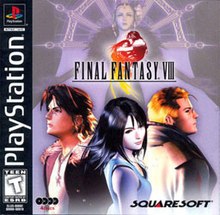
The box cover of the PlayStation version of the game, showing three figures (from left to right a man, a woman, and a man) looking away from the viewer at different angles. The game's logo floats above them, while the background consists of a faded image of a woman wearing an elaborate costume.


I am in the minority of people who consider Final Fantasy 8 to be the best in the long running series. So with the remaster due to be released on the PlayStation 4 on the September 3rd, I thought that it would be a good reason to write about one of my favourite games of all time.


I have a quick confession to make, I am not a big Final Fantasy fan, before and after number eight was released. I liked seven and twelve, but the others just haven’t held my attention for their entire lengths. To the surprise of many, I rather enjoyed thirteen, I think it has the best combat in the entire series, but like the other games, the story just didn’t hold my attention to the end.


So, what makes Final Fantasy 8 so different?


I simply love the setting and characters. The protagonist is a guy called Squall, he’s somewhat dour and a bit of a loner. Someone I could relate to (especially at the time of the game’s initial release when I was in high school); which is a contrast to most videogame characters at the time. He doesn’t really fit into one social group, and it’s not until the latter part of the story that he begins to open and reveal his emotions to those around him.


The beginning of the story and a large section of the setting is based in Balamb Garden, it’s like a militaristic university where students live while studying. It’s an unusual setting that is still rare to find in videogames to this day. I like it because it makes the characters feel like they are a part of something bigger, that connects to the wider world. And unlike a lot of other Final Fantasy worlds, the world in eight is far cleaner and pristine. It’s certainly a futuristic aesthetic, but one that is not overloaded with technology and glitz, and neither is it a fatalistic wasteland on the other end of the spectrum. Overall, the visuals, the world and the character models are more realist compared to those in Final Fantasy 7 and 9.


The side characters vary in design and they are all interesting for the most part, as well as being important to the context of the story, especially when a major revelation takes place in the last third of the game. The characters drive the story forward, they aren’t just reacting to their surroundings, which is not the case with a lot of videogame stories let alone a Final Fantasy game.


You also take control of a character that exists in the past, these come in the form of dream sequences that the protagonist has at random points. Not only was Laguna a character I enjoyed spending time with, but I saw another aspect of the world through his point of view.  


As with all Final Fantasy games, the music is spellbinding, the theme to Balamb Garden is probably the best piece of music in any game that I have ever heard. Listening to its thoughtful and distant melancholy gives me goose bumps and reminds me of more simpler times in my youth.


Unlike its modern successors, Final Fantasy 8 has turn based combat, it’s rather simplistic compared to the latter games in the series. But it makes you approach the combat in a strategic manner, which is the opposite to the combat in Final Fantasy 15s free flowing hack and slash style. Which grew tedious in my opinion.


Final Fantasy 8 is not perfect, few games are. The Guardian Forces battle animations are way too long when you cast them, the story does drag out a little towards the end, and while the latter narrative revelations are imaginative and unpredictable, the execution is not wholly convincing. A few of the supporting cast are not really given much substance within the narrative after their initial introduction.

The villain is interesting for the most part, and it is revealed that she has a deep connection to the protagonist, which adds an extra dimension to the overall plot. But she’s kind of there in the background most of the time, which is understandable because she is just a cog in the protagonist’s overall journey, but she leaves no real impression at the end of the game.


Its been ten years since I last played Final Fantasy 8, and though nostalgia can be cruel, I can’t see the experience to have lessened since. Which was the case when I recently played Shenmue, but I cannot wait to immerse myself in its world once again, and so should you.    

Thursday, 4 July 2019

Crash Team Racing: Nitro Fueled review (PS4 version)

Crash Team Racing Nitro-Fueled cover art.jpg

I love a good kart racing game; of the last two generation of consoles they are the only racers that I have gone out of my way and purchased. It’s not that I don’t like racing games, I tend to just like to play them in a more casual sense. Once I’ve blast through the main single player content, I generally just dip in and out of the online modes from time to time for a short burst of fun.


So Crash Team Racing ought to be right up my street, especially when you consider that I really enjoyed Team Sonic Racing, which I’m still having bags of enjoyment with. But the game has left me a little underwhelmed, it is without a shadow of doubt beautifully crafted with ample amount of content. But for all the fun that it provides, it cannot make up for the many flaws and frustrations I had with it.


I never played the original version on the PlayStation, so I don’t have the nostalgia that a lot of other gamers might have going into the game from the get-go. To start with the good, the game is utterly gorgeous, the cartoony visuals and aesthetics are fantastic and ooze off the screen. The number of racetracks is astonishing and supply the game with plenty of different modes. You have your basic cup races that are four races long, a time trials mode, and a battle mode where you use power ups against other players in one big arena.


And then there is the marquee adventure mode which is a scant story that takes you through each of the racetracks. There are three challenges in each track that you can get through, finish first in a normal race, the CTR challenge where you must find the hidden letters CTR somewhere in the track, and lastly you have the Relic Race. I really enjoyed the Relic Races, you have a small amount of time to finish three laps, but you can collect numbered boxes that pause the timer.


The single player content is quite rich, and like Team Sonic Racing there is also a currency progression system. You earn this currency by taking part in the game’s content, no matter what it is. The more successful you are the bigger the reward. You get to spend this money in the Pit Stop, this is the store where you can buy characters, skins and other special items. The prices might be a bit on the steep side, but if you play the game a fair amount, your reward money swiftly stacks up. Unlike some other gamers I rather like this sense of progression, it’s nice to be rewarded for your effort, and then spend it on what you want, knowing that there is always more things to collect. There are no paid micro-transactions thus far, but I would not be surprised if this was to change at some point, Activision added them into Black Ops 4 not longer after its initial release.    


Away from the single player content, you have the multiplayer online modes, where you can either race against other people or duke out in the battle mode. The netcode has worked perfectly fine from my experience, so I had none of the apparent lag issues that plagued the game when it was first released. 


As with most first-person shooters and fighting games, racing games are my casual fix. As I stated earlier, after completing most of the initial single player content, I generally just play the online modes from time to time, when I’m either bored or just listening to a podcast. The online in CTR is easy to set up and its fun for the most part, but my frustrations begin with the power ups that are too abundant for the players to pick up. It does not help that are way too overpowered for my liking, and influence the flow of a race more than any other kart racer that I have ever played. And to be honest they aren’t that different at face value. You have your usual missiles and boosters, but the impact they have is disproportionate in my opinion. It makes the experience too chaotic and cuts away any rhythm to the action. I am open to changing my mind on this the better that I get at the game, but one of the reasons why I keep going back to Team Sonic Racing is because the racing flows so much better. And the team mechanics make the experience unpredictable but not cheap in its difficulty.


Another issue is the boost mechanic, you will have to master this particular manoeuvre if you want any chance of winning against the rubber banding AI. You must basically hold the drift button on a hard turn and then press the jump button, which then prompts the meter in the bottom right of the screen to fill up. You then have to press the other slide button at the right time to generate a boost. It took me a while to get a grasp of doing this, but I really struggled at first because my timing was never quite right. I don’t have a problem with this mechanic per se, it just feels out of place in what I look for in these types of games. With that said, the controls and feel of the vehicles were generally responsive and perfectly fine.   


In conclusion I just haven't enjoyed Crash Team Racing as much as I'd thought, for the reasons that I have explained, it just hasn’t stuck with me. It’s not that the game is too difficult or technical for what it is, I just think some of the core gameplay components make it feel like too much of a chore just to drop in for the occasional hour or so. Despite my issues with the game I can see why it sits on a 88 score on a Metacritic, although mine would be closer to 70.  


Resident Evil Requiem review (PlayStation 5 version)

Resident Evil Requiem is the ninth mainline entry in the series, and for me it had a lot to live up to as the successor to Resident Evil Vi...