Sunday, 20 October 2013

Captain Phillips- Film Review

Captain Phillips Poster.jpg

Director: Paul Greengrass
Starring: Tom Hanks. Barkhad Abdi
Running time: 2 hours, 14 minutes

A very enjoyable, edge of your seat thriller. Wonderfully led by Tom Hanks

There are very few actors with the diversity, consistency and longevity of Tom Hanks's career. And Captain Phillips is yet another stellar performance and movie to put to his resume. Directed by Paul Greengrass (United 93, The Bourne Ultimatum) tells the true story of a group of pirates who hijack a cargo ship in the waters close to Somalia.

Tom Hanks plays Captain Richard Phillips, who is in command of MV Maersk Alabama, as it leaves Oman and heads for Gulf of Aden, Mombassa. The build up to the hijacking is perfect, as it is neither too slow to get bored, but quick enough to understand the main character, and the interaction he has with the ship and the supporting crew.

When the action does set in and the hijacking begins, it is done with a subtlety that doesn't make it overblown with quick edits, the tone fits in with the unfortunate circumstances in which the cast of characters find themselves in. The moments of action are full of suspense, and unpredictable consequences, with moments of deceiving comfort.
The director does a very good job of letting the audience feel how isolated the crew of the ship are., out in the middle of the ocean, and the subsequent events that unfold as the hijacking goes on.

Tom Hanks is superb as Captain Phillips, a calm man who is doing the best he can out of a position which is not under his control. Equally impressive is Barkhad Abdi as Muse, the pirate leader. Unlike other films which might have gone for the easy option of creating a one dimensional good versus bad narrative. This film treats both characters with a sense of neutrality, there is a real attempt to create a human story about a tragic set of events.

The last third of the film is perhaps a little overdrawn and claustrophobic, the film requires your attention non stop, and there were moments I hoped the story would move quicker than it did. The dialogue also becomes very shouty, and perhaps could have been toned down a little. But the closing moments of the film make it all worth it, with a fantastic ending and an unexpected direction in the story, the very few bad points do not stop the overall experience being very enjoyable and worth every penny of the ticket price.

Verdict-4/5

Sunday, 13 October 2013

Resident Evil: Series overview, part 2

The second part to my overview of the Resident Evil video game franchise

Resident Evil 0: (Nintendo Gamecube)
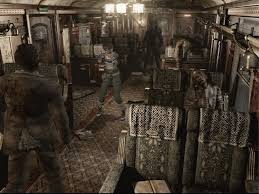


Orginally intended to be released for the Nintendo 64, as the title says it is a prequel to the first Resident Evil. You explore learn more about the history of Umbrella, what happened to Bravo team before Alpha team arrived, and how the T Virus infection spread to the mansion. The introduction of co-operative play between the two main protagonists Rebecca and Billy adds a new dynamic to the game play. Despite being the best graphically in the series at the time of release, it was by this stage that the mechanics of the series was beginning to feel a little samey.

Pros:

* The story- you learn what happened to Bravo team before Alpha team arrived, and before the mansion incident.
* The co-op- allowing you to control and switch characters is different to anything else previously in the series. At certain stages the character's split up, in terms of the direction of the story and puzzle solving
* The train level is one of the best in the entire series, even if it is a little short
* Auto aim, may make the game a little easier but less frustrating
* A lengthy game, two disc
* Infected monkey's- a new enemy that is faster than the hunter's but less powerful
* Fantastic final boss
* Different tones of music- the calming music in the typewriter rooms is always welcome

Cons:

* No item box- most likely introduced to make the game more challenging, and because there are two playable characters at once for most of the game. But it adds nothing, and only frustrates the gamer with pojntless backtracking (only a certain amount of items can be left in one room)
* Aside from the Train, the locations are very generic and rather dull
* Aside from the monkeys, the enemies are generic and unimaginative, seem to be more realistic compared with previous Resident Evil games

Resident Evil 4: (Gamecube, PS2, WII).
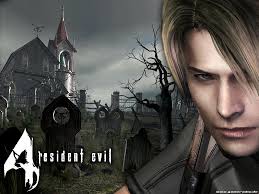

The game that changed it all. Gone were the fixed camera angles and the zombies, now replaced with the over the shoulder camera and Los illuminados. Taking place seven years after Resident Evil 2 and with Umbrella bust, Leon now has to go in search of the President's stolen daughter, where he encounters a cult infected with the Las Plagas. Even eight years after its release this game still holds up well today, it is plenty of fun, the length of the game is huge, there is plenty of replay value. It defines what a video game should be.

Pros:

* Non stop action, there is never a dull moment. The action works because it is enjoyable and diverse, helped by the weapons upgrade system.
* Wide variety of locations, all of which are explorable, and all different to one another
* Vast array of Arsenal- machine guns, sniper rifles, different hand guns, different shotguns
* Weapon ugrade system- you collect treasure to sell as you go along, and you can use this to upgrade the weapons you have. You can upgrade the power, capacity, reload speed, and firing speed in all weapons. Each have up to six levels to upgrade to.
* Variety of interesting enemies- Garrador is one of my faves, as well as the relentless chainsaw guy, and the Las Plagas run at you and attack, rather than slow like the zomibies in previous games
* Very good boss fights and character villains- Krauser and the psychotic midget Ramon Salazar are the best, all provide the player with different tactics to kill them
* The mercenaries mode is very good and enjoyable
* The replay value is better than any of the previous games

Cons:

* Aside from playing as Leon, the game intentionally has very little in common with the previous Resident Evil games, in nearly every single way. From the story to the gameplay
* You have to practically pause the game to get into your item select menu to change weapon
* If you complete the game you can't pass your items over to a new difficulty. Complete it on Normal you can't roll your items onto Professional mode (which is very very difficult)

Resident Evil 5: (PS3, XBOX 360)


A game met with much less praise than 4, in part because it doesn't do anything better, other than the graphics of course. But it is still very enjoyable nevertheless. You play as series veteran Chris Redfield, now a member of the Bioterrorism Security Assessment Alliance (BSAA), who is sent to Africa to apprehend Ricardo Irving, who is selling bio-organic weapons on the black market

Pros:

* Set in Africa, which is very different compared with the other Resident Evil games
* The best mercenaries in the entire series, plenty of characters and maps
* Online play
* You can change your weapon without stopping the game
* Non stop action, not a dull moment
* Improved graphics, make for a more detailed environments and atmosphere
* Along with the inclusion of Albert Wesker as the main villain, the story is related to the previous Resident Evil games far more than what number 4 was
* The return of the lickers
* Plenty of replay value

Cons:

* Sheva- uninteresting character, who also has a very annoying AI
* The boss fights and main villains vary in quality, some are poor, some are okay. None have the impact of those in 4
* Jill Valentine as a villain, when she should have been Chris's partner (as she was in the gold edition)
* After all these years Ozwald Spencer turns up...for less than a minute (fans of the game will know who he is)

Resident Evil 6: (PS3, XBOX 360)


Overblown and over ambitious. A game that tries to be the jack of all trades and ends up the master of nothing. The game sees the inclusion of old character's Chris and Leon, as they try and stop a bio terrorism attack, older characters such as Sherry Birkin and Ada Wong also return. Split into three campaigns, all of which cross over at some point, the game feels disjointed. If it was trimmed down, and with a clearer focus it could have been more than just the average game it turned out to be.

Pros:

* Three campaigns make for a long game- Sherry and Jake's is the best overall in my opinion
* The beginning of Leon's campaign in Tall Oaks resembles the atmosphere of the old Resident Evil's, it also brings back the old slow zombies
* Plenty of action- if you like that sort of thing
* Although overused, some of the QTE (quick time events) moments are pretty special
* Some very good boss battles
* Return of Hunnigan from Resident Evil 4

Cons:

* Too many QTEs, and for no real reason sometimes.
* Too many cutscenes, disrupt the flow of the game
* Locations in the game are not there to be explored but to just look at
* Too many campaigns, developers clearly tried to do too much. Should have just made one, would have gave it greater scope for story
* Essentially an action game and nothing more, which even 4 and 5 most certainly weren't. The lack of variety in the gameplay is a big let down
* Central villain is weak, and only shows up for minimal time
* Replay value is poor, Mercenaries is limited unless you buy it online. And ocne you have completed all three campaigns, you'll be reluctant to return to all of them

Sunday, 29 September 2013

Grand Theft Auto is an overrated franchise, and so are open world games

Since the third Grand Theft Auto installment every one has since been released with a great deal of hype and universal praise, probably unrivaled within the video game industry. Great games from renown franchises such as Super Mario, Zelda, Call of Duty, and to a lesser extent Final Fantasy are always met with critical praise and hype. But a new Grand Theft Auto game takes it to a whole new level, none of these other games get coverage on the same scale, while GTA will be in the newspapers, the radio shows, and the nightly news. And none of these games will be met with bylines such as 'taking video games into mainstream culture'.

I can understand some of this, but a lot of it I don't. Both work hand in hand, the hype is built on high praise, while its universal praise only feeds the hype. The end product is a franchise that sells millions into double figures. The only GTA game I have ever completed was the third one, it was the first full on 3D GTA game, and the one that kicked off the sandbox genre. I have played all of the others, but never completed them, and I have to confess, I have only played GTA 5 for a short spell, but I have watched it enough to make a judgement.

And it hasn't changed my mind on what I think about the series, and neither do I think it actually does anything different in comparison with the others. Let me first say that I have enjoyed every single GTA game, they are extremely enjoyable and entertaining, unlike many games they can tell a narrative, and they are the best of their own genre, and they have helped bring the video game industry into the mainstream. But I do think the whole thing is vastly overrated, 'the jack of all trades but the master of none' is the best way to sum up a GTA game, and never should it be put into any top ten game series of all time list.

GTA is without doubt a technical marvel, its high production value shines through, from the large map(s), to the voice acting, the radio shows and soundtrack, the variety of different gameplay elements, and the graphics (which are the most impressive I have seen of this generation). Like all open world games Its biggest success is that it gives the player the illusion of ultimate freedom within the world that the game exists, in GTAs case this is true, but it comes at a cost.

I have always preferred open world games in terms of online interaction, better known as MMORP (massively multiplayer online roleplaying game). I like building up a character, and using your abilities with other players to get through the game, it's more of social interaction experience more than anything. But back to GTA, its vast openness takes away a core gameplay element. When I play GTA, never do I ever feel a moment of tension, never do I feel like I am being mentally challenged, although the maps of a GTA game are vast as they are, and despite the fact that it all looks good and accessible, for the most part they act as a setting and nothing more. Which is the biggest problem I have with open world games (sandbox). In fact the only open world game I have ever really loved is Ocarina of Time and the Final Fantasy games, and even those are not an out and out open world games in the truest sense.

I like games which are focussed on one kind of gaemplay engine, I also like games which have some linearity in them, I like games which have levels and structures within them, and where the setting isn't just a backdrop, it acts a character within the story. Let's take Ocarina of time again, throughout the setting of Hyrule you have to go through different dungeons to progress into the story, each provided a big challenge and a variety of different puzzles. In all the Tomb Raider games (and to a lesser extent the new reboot) you have levels where you have to use your brain, as well as shooting a lot of enemies to progress further, there was real reward as you progressed. The brilliance of the original games that they made the most simplest of tasks appear impossible.

The problem with open world games is that the content of the game is reduced to endless tasks which feel like mini games.      

Tuesday, 10 September 2013

Resident Evil: A series overview part 1

As you may already know I am a huge Resident Evil fan, I'm talking about the games, I have mixed feelings about the films. Although the series was not the first survival horror series on the market, it's fair to say it was the first to really perfect it. The series has gone through drastic changes over the years, but the quality has for the most part been reasonably consistent. All of the old games were ported to the Gamecube (of which I bought all of the old games in the series on Amazon, and of which I have been playing quite a bit in my spare time), and I have also played and completed Resident Evil 5 and 6 numerous times on the PS3, both in the last six months. I have not included any side games (outbreak and Dead Aim), as well as Revelations, which I have a review of in another blog, and also because I only ever completed it once, which was over a year ago. I have also left out the original Resident Evil and replaced it with the Gamecube remake, both tell the same sory.

Resident Evil (Gamecube remake):

Unquestionably the scariest game in the series, and in my opinion the scariest video game I have ever played. Although it's ten years old it has dated very well, and is just as enjoyable no matter how many times you play it. Of all the games in the series this is the one which personifies what a survival horror game should be.

Pros

* Two campaigns, make for a very long game
* Genuinely scary, the mansion is a character within itself rather just a backdrop to the game, the puzzles are the hardest in any of the series
* Great graphics, add to the atmosphere, and still hold up well ten years after its release
* The crimson head- a more evolved zombie, in the later stages of infection. They literally run at you when they attack. To add further suspense to the game, they can only be killed by burning them, was a great addiction into the series, which has sadly not been repeated.
* The focus of the game is on survival rather than action. So the game requires genuine skill in utilizing your ammo

Cons:

* There are genuinely not that many, the game's difficulty may put some people off
* Compared with the other games in the series, the enemies aren't that varied, but it doesn't detract from the experience you will get.

Resident Evil 2: (PS1, N64, Gamecube)


A little bit more action focused compared with the original, but still equal in quality. The mansion is gone and replaced with a city and a police station. Overall this is my favourite game in the whole series.

Pros

* Two campaigns
* Wide variety of Arsenal, machine gun, shotgun, grenade launcher, magnum, bow, etc
* Great range of interesting villains, including the final boss. The lickers are a particular favourite in the game
* The story links well with the first game, even if none of the original cast feature
* Numerous settings
* A good range of interesting supporting characters, most important of these are Ada Wong and Sherry Birkin, both of whom will appear again later in the series

Cons:

* Because the game has not been updated, the graphics have dated, but it doesn't detract from the experience
* Compared with the first, it isn't that scary
* The puzzles are relatively easy

Resident Evil 3: Nemesis (PS1, Gamecube)


In truth this is more of a side story than an out and out sequel to the previous game, it takes place one day before 2 and ends one day after, its main aim is to bridges some of the gaps between the first and the second. The game also takes a further step towards an action game rather than a survival horror, and with the introduction of Nemesis, it provided one of the most memorable villains in the entire series.

Pros

* The story clears up a few loose ends, and you see the fate of Raccoon city
* You get to explore more of Raccoon city
* You get to play as Jill Valentine
* The introduction of Nemesis, brings a level of intensity to the game as he stalks you. Depending on the chocies you make in the game when you confront him, will have different consequences (good for replay value) for your progress
* Great range of arsenal, with the introduction of mixing powder to create ammo
* Introduction of 180 degrees turn, great for moments when you are in a tight situation

Cons

* The game takes the series sideways in terms of story development
* Shorter than the previous two, even with the choices you get to make. There's only one campaign
* The game is far more action focused
* Even on the most diffcult setting, it is a relatively easy game
* Dated graphics, but doesn't detract from the heart of the game

Resident Evil: Code Veronica (Dreamcast, PS2, Gamecube)


Code Veronica is the spiritual successor to the first Resident Evil, and the true sequel to Resident Evil 2. The game is reminiscent of the original in both difficulty and atmosphere. of all the games in the series this is the one I found most difficult, it has the hardest puzzles and the hardest boss fight in the entire series You get to play as Claire and Chris Redfield once again, which is a bonus.

Pros

* A frightening game, the locations (especially the prison) help this
* The puzzles are challenging, as the game is as a whole
* The game is lengthy, although you play as Claire for the majority of the game, there are moments when you switch to others for short periods
* It develops the story even further, as we learn more about Umbrella's history
* Numerous settings, all of which evoke a genuine sense of fear and isolation, like the first
* Pre rendered backgrounds replaced with 3D environments
* Dual Sub machine guns-the character will shoot two different zombies when you're faced with numbers

Cons

* There is a lot of backtracking, and this is mainly due to changing items over to solve certain puzzles. The metal detectors come to mind
* Unless you have a guide or take a look on the internet, many of the puzzles are frustrating and very hard, and unless you have a lot of patience they come across as nigh on impossible on first play through
* One of the boss fights is bloody difficult. It will take a lot of time, effort and lives, especially if you're not stocked up well in terms of ammunition and health items by the time you reach it


To be continued........


Monday, 12 August 2013

The Conjuring review

Director- James Wan
Running time- 112 minutes
Certificate- 15


There is so little originality in The Conjuring it should not be as good as it is. Everything that is so cliched about ghost film's is included, from the deserted farm house in the middle of nowhere, doors creaking open with no one there, secret basement, scary ghost children etc etc. But the film's saving grace is the brilliant cinematography and performances of the cast.

Based on a true story, paranormal investigators Ed and Lorraine Warren (Patrick Wilson and Vera Farmiga) are asked for help to help the Perron family, because after a few unexplainable incidents, they believe their home is haunted. The impressive opening credits and introduction showcase some of the film's effectiveness that follows throughout the rest of the film.

The director James Wan clearly loves the art of film making, as the audience we're always given a voyeuristic view of what is happening on screen. Camera shots are long and drawn out, and very rarely cut away in a matter of seconds like most ghost films's. I was drawn into the film throughout, unlike most other horror films, not once did I feel like like I was on the outside looking in. While many of the film's tricks are have been seen in other ghost films, the end result was never predictable. The film succeeds because the tension is genuinely scary between the moments of higher music and the eventual climax of each scene where the character's are in distress.

The cast is perfect, particularly impressive is Patrick Wilson as Ed Warren, and Joey King as Christine Perron. Because of the way the film has been shot and edited, it could have easily fallen on its own feet, but the terror comes through in each character in their own and individual moments in the film. Even the house the film is predominantly set in feels like a character itself, rather than just a backdrop.

Like so many ghost films, It's in the last third that the film falls a little wayward. because so much of the subtlety suddenly becomes rushed and chaotic, the sound effects become too loud, the cliches become unimaginative and forced. Think thunderstorms outside a secluded house with one person alone, someone possessed, someone being dragged and thrown along walls and floors. Those moments of tension are now replaced with predictable and laughable set pieces. Audiences certainly laughed in the auditorium I was in.

The film ends with the prospect of a sequel, which has now officially been confirmed due to the deserved success of this one. Let's just hope it matches the quality of the first.

Verdict-3.5/5

Tuesday, 6 August 2013

There's a reason why Dan Brown sells so many books...

Reading and writing should be for everybody and anybody, we thankfully don't live in times when it was only academics and journalists who were the only ones who did so. But this still has not stopped a sense of superiority of literature critics and English professors who still pride themselves on the old classics, most well educated people hate culture unless it is high culture, and considered 'Art'. Two weeks ago Clive James wrote a scathing attack on Dan Brown's work in the i Newspaper, 'calling it pretentious' among other other things. The column was mot without some merit, and at times quite funny. But I sensed a feeling of envy and intellectual arrogance in his piece.

What intellectual snobs and academics forget, is that most fiction books are now written for a variety of different people, including those that write them. Now of course certain books have more literaturey merit than others, the same way music has more artistic merit than others. The difference with writing a book compared with music is that for the most part a book is an individual piece of work, it's more personal, compared with popular culture music, of which I mostly detest, and of which I am completely snobby about. Of course old classics such as The Colour purple and Lord of the flies should be studied in schools rather than something like Twilight.

But like the Twilight series, Dan Brown's books have a large audience because they are both accessible, readable, and have story's which are engaging. In Dan Brown's case, the books are focused on a central topic, his chapters are short and tightly fitted together, it's easy to see why they have been turned into films. The language itself, the prose, the style is by no means perfect at all, and some of the imagery used to describe situations can be laughable, particularly to those who are hardened readers, and the artsy fartsy literature academics.

But where Dan Brown succeeds, and where all authors have to succeed in, and if they want there books to be read all the way through, is that they have to ultimately be interesting. The narrative and characters have to keep the reader involved, and in the (story driven) genre Dan Brown writes in, the plot changes have to rewards you with the time that you have spent reading.

The great thing about reading is that it invokes emotions while at the same time requires you to use your own imagination. And for all of a book's substance, it has to be entertaining, whether that's with witty dialogue like Oscar Wilde, imaginative worlds and great characters like J.K Rowling, or Dan brown's narrative led mystery/thriller novels.  


Friday, 19 July 2013

True Romance in New York

Are you looking to go away on a short romantic break with that special person, look no further than the Big Apple.

Without doubt New York is the most iconic city in the world, but it also provides the greatest romance stories in the world. Despite most romantic comedy films being set in the Big Apple very few associate it in the same way as Paris or even London.

From the moment you step onto the streets of this city it is easy to feel intimidated but there is no need to be, from the entire buzz and entertainment of Times Square to the soothing and relaxing Central Park, there is something for everyone.

A good way to start is at Central Park, at over eight hundred acres in size it provides the perfect sanctuary from the rest of Manhattan. From here you can walk arm in arm through the peaceful observatory garden, take some great photos at Strawberry Fields, take a rowing boat under Bow Bridge at the Ramble and Lake, or for $35 you can travel in a romantic horse drawn carriage from one end of this lush part of the city to the other.

There is so much more you can do, for the experience it is worth going to the top of the Empire State building, but for the best panoramic view of the city, go to the top of the Rockefeller centre. From here you get to see every inch of the city's skyline for all its glory, although it's tempting to go at night it is best to go during the day so you can see Central Park and the Hudson River.

Away from all of the sight seeing there is plenty of shopping to do, lets face it there is no point in going to New York if you are not going to do a bit of shopping. In Midtown not too far from Times Square you have Macy's, the largest shop in the world, you can pick from every designer brand imaginable, the choice is yours.

But it's at night when New York really comes to life, if you choose to pick a hotel near Times Square it will give you easy access to all of the Broadway shows, there is a wide variety to choose from, but it's
advisable to buy tickets in advance to avoid price hikes and long queues.

If it's not Broadway you are after why not try going out for a romantic dinner, The River cafe is the perfect place. Located at the foot of the Brooklyn Bridge, it is perfect to watch the lights of Manhattan at dusk before you head off back to your hotel. Remembering that a whole different story begins the next day in the city that never sleeps  

* This is a slightly updated version of travel feature I did in my first year of University. I have been to New York 3 times, the photo in this blog is one I had taken on a boat tour around the Hudson River 

Resident Evil Requiem review (PlayStation 5 version)

Resident Evil Requiem is the ninth mainline entry in the series, and for me it had a lot to live up to as the successor to Resident Evil Vi...