It doesn't surprise me whatsoever that there are over half a million people on zero hour contracts, as research by the Office for National Statistics confirmed, and which was splashed on the front cover of The Guardian earlier this week. Since then the subject, not for the first time has been the topic of discussion on many radio shows and newspaper reviews. I have been meaning to write about this before, seeing as I have experience of being on a zero hour contract, but I was still in employment with the company. But now that is no longer the case, here is my take on zero hour contracts.
There is a general view that zero hour contracts have good and bad sides to them, I'll start off with the good. Zero hour contracts give the employee flexibility, this is great for students and the elderly who just want to earn a bit of money on the side, and it is helpful to parents who have childcare responsibilities. Within reason you can easily negotiate the days you can and can't work, if you work hard enough the hours will be offered to you, and there is a possibility of full time work after a period of time, if you want it. And if you need a shift covered it's relatively easy to do so without too much fuss.
But despite the positives that they can offer, zero hour contracts are just a more modern example of how insecure the British labour market has become and heading towards. Zero hour contracts take away any kind of social contract between the employer and the employee. Instead of being a member of the company you're just a worker, and nothing more. Your weekly hours can change from one week to the next, no matter what the trade is like, and in general the extra hours offered to me were done so at the last minute, often on the night before they wanted me to do the shift or on the day that I was already doing a shift, they would ask if I could extend it (I've been asked ten minutes before my shift was meant to end).
If this is is the case it can be hard to plan round your life, because if for examples sake I had five shifts in one week (no matter how many hours), I generally planned to do things on the days I had off, so I would often have to reject the extra hours. Which doesn't leave a very good impression on your supervisors, and it can lead to the loss of hours.
Zero hour employees are also not entitled to pension rights, share schemes, sick pay, or even holiday pay (this one example was not true in my case, but I know of many companies who don't provide it). And their are companies who will only let employees work exclusively for them no matter how few hours they're working (this was not the case with me albeit).
All of these are just examples of where the relationship between those on zero hour contracts and their employers is non existent. It's no surprise that the vast majority of zero hour contracts come from the retail and fast food sector, where the employers are more than likely going to be large companies. I'm no Marxist and I am generalising here, but above everything else their one and only goal is to maximise their profits as much as they can, the welfare of their employees is secondary.
At the end of the day, it really is no surprise that much like payday loans, zero hour contracts have boomed since the world economic crash of 2008. I personally think they are immoral for all of the bad things I have just written about them, and I would like to see their complete abolishment, but I doubt that will happen, even with a Labour elected government. But some form of regulation needs to take place because that half a million mark will only grow if nothing is done.
Thursday, 13 March 2014

Saturday, 15 February 2014
Robocop- Review

A much better than expected remake of a classic
Director- Jose Padilha
Running time- 1 hour, 52 minutes
Certificate- 12A
Decent remakes are hard to come by, 'True Grit' and 'The Fly' are exceptions, but by and large they're more often than not quite unnecessary. On face value one of these is the 1987 classic SciFi action movie 'RoboCop', it was a film so raw and violent that the technology currently at the disposal of film-makers wouldn't in anyway enhance the experience, another problem is that the film still stands the test of time. So after watching the new 'RoboCop' I was pleasantly surprised to find it enjoyable, far more than I expected but its flaws mean it's nothing more than a decent action film at best.
Like the first film, the premise is centred on a Detroit cop Alex Murphy (Joel Kinnaman) who in this film is fatally injured by a car bomb planted by local criminal Antoine Vallon. OmniCorp, a large corporation who create robot technology for military purposes see it is an opportunity to create a man/machine crime fighting tool. Their intention is to create a hero, someone people can look up to, and to also persuade the American Congress to repeal the Dreyfus Act, which blocks the use of Robots on the streets of America.
The film succeeds in creating a conflict between man and machine, by asking whether one is compatible with the other, and what would the implications be of letting machines in some form or another become the standard bearers of justice when they have no jurisdiction or emotional response to their actions. And some of the scenes of Alex Murphy with his family after the transformation are genuinely moving but often distractive, the feeling of loss is far greater in the original because of their lack of presence. The pacing is well done, and the narrative build up from Murphy coping with the change and becoming RoboCop is by all accounts satisfactory.
The casting is perfect with Gary Oldman playing Dr Dennett Norton, who fills the companion role similar to that of officer Anne Lewis in the original, he becomes the person to whom Murphy gains back his humanity. Michael Keaton plays OmniCorp CEO Raymond Sellars perfectly, never too evil to be a typecast villain but still morally greedy to be considered bad. While Samuel Jackson plays Pat Novak, in various clips he appears as an exaggerated version of a news show host in a programme called The Novak Element. His role is a play on the bias in modern day 24 rolling news and how this is used to change public opinion.
But the film surprisingly fails when it comes to what the original did so well, action. The action scenes in the new RoboCop are just too short and unspectacular. One of the reasons for this is that RoboCop now functions more as a machine controlling a man than vice versa, so he now runs very fast and his special vision through his visor allows him to kill multiple enemies effortlessly, taking away any kind of tension. The 12A certificate doesn't help, the original was violent and raw without ever being gratuitous, it showed bad people get their comeuppence in a way that was hard hitting but also satisfying.
The film only vaguely shows RoboCop cleaning the streets of Detroit, and the city itself is now nothing more than a backdrop, nothing of any economic or social problems is explored, if you wasn't told it could be any American City.
Another problem is the absense of any true villain, Antonie Vallon, the person behind Murphy's injuries comes and goes without any character development or much screen time, leaving very little impression. As much as Michael Keaton is wonderful as the CEO of OmniCorp he isn't an out and out villain, although snarky he is no way threatening. This is a problem because there's no antithesis to RoboCop, there's no one on screen to really fear or dislike in any great way, which is a big problem in what is essentially an action film.
RoboCop doesn't hold a candle to the original but by itself it's a decent action film, it grips you from the get go, it's entertaining and there is a real attempt to make a film which is in spirit with the original but deviates in a different direction. But in the end it's rather forgettable albeit enjoyable.
Verdict- 3/5
Saturday, 25 January 2014
Kindles will never replace the magic of a physical book
Thought about buying a kindle for reading, there's no need
Going back last year when I was still a student I managed to get enough money together to buy an Amazon Kindle Fire. My intention was to actually re-buy a Nintendo 3DS, which looking back now I wish I had bought instead, anyway I wanted to get something which would keep me entertained between my travels from Middlesbrough to London, and vice versa. Instead of getting a 3DS I ended up getting a Kindle, I love reading and try to do so as much as I possibly can, and I can pretty much read anything from early 18th century literature to Dan Brown or Stephen King. I also purchased one because of the library of old literature which I could download for free on Amazon.
Well about two months ago my Kindle was stolen when the house I live in was burgled, although by that stage I had not used it in months I would still rather have liked to have kept it. But I hope they enjoy my copy of Nick Clegg's biography because I know I wasn't.
The Kindle Fire is a smart device, it's clever and it looks very sexy in your hands, and it's far more convenient way to buy and read books, as well as other multi platform media like films. And for many it provides them with an alternate opportunity to publish their work on. With that said it's is unfortunate that we are inevitably heading in the direction where eventually digital downloads will overtake the sales of physical books. But I'll give a list of reasons why I think reading a real book is far more rewarding than reading from a kindle.
1) Physical books are easier to read from
Contrary to popular belief Kindles aren't more comfortable in your hands compared with a physical book, but neither are they really less so either. However, swiping your finger to turn each page does get annoying.
2) You can't pass it on
The great thing about owning physical copies of books is that you can give them to other people once you've read them, you can hand them over to charity shops, you can sell it on to others.
3) They can be used to decorate your surroundings
Books can be used to decorate your life, they provide a personal touch in your living space, whether that's on your work desk, shelf space, or even coffee table. Having a library of books gives someone a sense of fulfilment, and to have these visibly around you provides warmth.
4) The smell of paper
There is something special about the smell of new paper, and the feel of it on the tips of your fingers as you flick through a book
5) It's more active and more rewarding to buy books
One of the joys of going out and buying a book is that it means you're actually making contact with other people, you're going out of your way to make the effort to buy something. It's also nice to make contact with people, for example about a year ago I went into Waterstones in search of buying a new book but I had no idea of what I wanted to read. So with the help of a member of staff I left with Lionel Shriver's brilliant 'We need to talk about Kevin'. I highly recommend it.
6) It's more expensive and restrictive
You can get books which are over a hundred years old for free on a Kindle because of copyright reasons, which is very good. But there is no need to when you can get these books for cheap prices on Amazon already, or even in charity shops if you dig around. Because a Kindle is a digital device you'll be paying top price for almost all contemporary books, by not buying a Kindle you will just save yourself a lot of money in the long run.
7) It's not just the words that are a work of art
You should never judge a book by its cover, but it certainly helps when the front cover is eye catching. A part of discovering new books is looking at the diversity of the artwork that covers it. Think of the iconic insignias of 'The Hunger Games' novels or even the holy cross on the Bible.
8) You don't legitimately own what you buy
Like most digital media, even if you buy it and download it, you don't technically own it, you're really just borrowing it. Because of Digital rights management you can't hand it over to other people (unless you actually give them the kindle physically, which if it was the case, would just prove my point entirely). And like most pieces of technology a Kindle will eventually burn out, taking your library of products with it.
9) Kindles are distractive
In an age where pretty much everything is seen through a digital screen, books provide your mind and eyes with a bit of solitude away from it all. There's nothing much nicer than having a cuppa tea, sitting back and reading a book in a comfortable environment. It's a good way to break away from a screen. I've also always found that I take a lot more information in when I read something that I can physically hold, my mind is much sharper and my imagination far more focussed.
Going back last year when I was still a student I managed to get enough money together to buy an Amazon Kindle Fire. My intention was to actually re-buy a Nintendo 3DS, which looking back now I wish I had bought instead, anyway I wanted to get something which would keep me entertained between my travels from Middlesbrough to London, and vice versa. Instead of getting a 3DS I ended up getting a Kindle, I love reading and try to do so as much as I possibly can, and I can pretty much read anything from early 18th century literature to Dan Brown or Stephen King. I also purchased one because of the library of old literature which I could download for free on Amazon.
Well about two months ago my Kindle was stolen when the house I live in was burgled, although by that stage I had not used it in months I would still rather have liked to have kept it. But I hope they enjoy my copy of Nick Clegg's biography because I know I wasn't.
The Kindle Fire is a smart device, it's clever and it looks very sexy in your hands, and it's far more convenient way to buy and read books, as well as other multi platform media like films. And for many it provides them with an alternate opportunity to publish their work on. With that said it's is unfortunate that we are inevitably heading in the direction where eventually digital downloads will overtake the sales of physical books. But I'll give a list of reasons why I think reading a real book is far more rewarding than reading from a kindle.
1) Physical books are easier to read from
Contrary to popular belief Kindles aren't more comfortable in your hands compared with a physical book, but neither are they really less so either. However, swiping your finger to turn each page does get annoying.
2) You can't pass it on
The great thing about owning physical copies of books is that you can give them to other people once you've read them, you can hand them over to charity shops, you can sell it on to others.
3) They can be used to decorate your surroundings
Books can be used to decorate your life, they provide a personal touch in your living space, whether that's on your work desk, shelf space, or even coffee table. Having a library of books gives someone a sense of fulfilment, and to have these visibly around you provides warmth.
4) The smell of paper
There is something special about the smell of new paper, and the feel of it on the tips of your fingers as you flick through a book
5) It's more active and more rewarding to buy books
One of the joys of going out and buying a book is that it means you're actually making contact with other people, you're going out of your way to make the effort to buy something. It's also nice to make contact with people, for example about a year ago I went into Waterstones in search of buying a new book but I had no idea of what I wanted to read. So with the help of a member of staff I left with Lionel Shriver's brilliant 'We need to talk about Kevin'. I highly recommend it.
6) It's more expensive and restrictive
You can get books which are over a hundred years old for free on a Kindle because of copyright reasons, which is very good. But there is no need to when you can get these books for cheap prices on Amazon already, or even in charity shops if you dig around. Because a Kindle is a digital device you'll be paying top price for almost all contemporary books, by not buying a Kindle you will just save yourself a lot of money in the long run.
7) It's not just the words that are a work of art
You should never judge a book by its cover, but it certainly helps when the front cover is eye catching. A part of discovering new books is looking at the diversity of the artwork that covers it. Think of the iconic insignias of 'The Hunger Games' novels or even the holy cross on the Bible.
8) You don't legitimately own what you buy
Like most digital media, even if you buy it and download it, you don't technically own it, you're really just borrowing it. Because of Digital rights management you can't hand it over to other people (unless you actually give them the kindle physically, which if it was the case, would just prove my point entirely). And like most pieces of technology a Kindle will eventually burn out, taking your library of products with it.
9) Kindles are distractive
In an age where pretty much everything is seen through a digital screen, books provide your mind and eyes with a bit of solitude away from it all. There's nothing much nicer than having a cuppa tea, sitting back and reading a book in a comfortable environment. It's a good way to break away from a screen. I've also always found that I take a lot more information in when I read something that I can physically hold, my mind is much sharper and my imagination far more focussed.
Monday, 6 January 2014
The Hobbit: the desolation of Smaug (review)

Director: Peter Jackson
Certificate: 12A
Running time: 169 minutes
A far better sequel, still hampered by its running time
The first Hobbit film 'An unexpected journey' was a good albeit very plodding and in the end a little underwhelming, especially when you consider the brilliance of the Lord of the rings trilogy. Thankfully the sequel is much more intense and its narrative runs much straighter, and in a more purposeful direction.
The film begins where the first one ended, Bilbo Baggins (Martin Freeman), Gandalf (Ian McKellen) and the company of dwarves are continuing their journey to the lonely mountain to reclaim Erebor, the old Kingdom of the Dwarves which was attacked by Smaug the Dragon. In typical Peter Jackson fashion the landscapes of Middle Earth are beautifully shot, the sets are masterfully brought to life, especially Laketown which makes its first appearance in the last third of the film. Not only does it look great but it shows the people of Middle earth in their everyday life, which is something I did like about this film, unlike in the original trilogy where outside of the main cast the people of Middle Earth were nothing but extras with little relevance.
The action scenes are a lot more exciting this time and there are more of them, one of those sees the return of Legolas (Orlando Bloom) from the original trilogy, he appears in a real roller-coaster scene in which the main characters have to escape an army of chasing Orcs while riding through a river inside barrels.
But the greatest action sequence in the entire film is the one where we finally meet the Dragon Smaug. I won't spoil it for you, but let's just say that Smaug is without doubt the greatest CGI character that I have ever seen in a film, who is wonderfully and sleekly played by Benedict Cumberbatch, each of his dialogue lines are memorable. It was worth the price of the ticket all by itself.
The visuals are exemplary as you would expect, but still I still question the Orcs being computer animated. The great thing about the original was the make up of the Orcs, which was second to none and made them genuinely menacing, with the make up gone and replaced by animation they come across as pieces of meat with little character. With that said they still look impressive and believable on screen.
Although the film title implies that it is centred on Bilbo Baggins like the first film, he is not the most important character in the film. The focus of the film is on Dwarf Thorin Oakenshield, the rightful heir to be King of Erebor, which is noticeable throughout the film, it's only when Bilbo confronts Smaug that his relevance comes into place.
With so many positives the film does have problems though, and one of them returns from the first hobbit film, the bum numbing running time. It is still too long, let's not forget the actual book this is adapted from is a children's novel which is three hundred and ten pages long, about half an hour could have been edited out.
Which now brings me onto a love triangle involving an entirely made up character called Tauriel (Evangeline Lilly), who doesn't even appear in the book. She was put in because there was a lack of female characters in the story, which is fair enough. But her involvement is for the purpose of a love triangle between herself, Legolas and Kili (one of the Dwarves). It is a completely incidental plot narrative that seems distracting and a little out of place.
I saw the film in both forty eight frames per second (3D) and in a normal screening. And I have to admit I preferred the latter, I enjoyed watching it at forty eight frames much more than I did when I saw the first hobbit film, but the level of detail can be too diverting for the eyes, it still looks like behind the scenes footage. In time forty eight frames per second might be the norm, but for the moment I still think it's going to be the exception.
Undoubtedly the positives completely outweigh the negatives, 'The Desolation of Smaug' is a spectacle of such a grandeur that it has to be seen on the big screen, and although the ending is a bit of an anti-climax it leads onto the final part of the trilogy in perfect anticipation.
Verdict-4/5
Saturday, 14 December 2013
The Hunger Games: Catching Fire (review)

Director- Francis Lawrence
Running time- 146 minutes
A sublime and worthy sequel, with a superb performance by the leading lady
The Hunger Games was a surprising film because the hype justified the high praise, I myself gave it a score of 4.5 out of 5. The highest I have ever awarded any film that I have reviewed.
Catching Fire while following very similar plot narrative to the first, for me is deeper and it has a certain cutting edge compared with the first.
A year after their victory in the 74th Hunger Games, Katniss Everdeen (Jennifer Lawrence) and Peeta Mellark (Josh Hutcherson) go on a victory tour of all the twelve districts of Panem. Now that they are both surviving members of the games they bring hope to the people of all the districts, which brings about the beginnings of an uprising. To destroy the image of Katniss, President Snow (Donald Sutherland) enacts the Quarter Quell, a Hunger Games that involves all living winners of the previous games.
With a bigger budget it looks and feels much bigger for it, and thankfully not for one minute does this make it overblown. I liked the fact that the training scenes are a lot more detailed, and the later action scenes at the end of the film are a lot more frantic compared with the first.
While the first film was about the Hunger Games within itself, this one is more to do with the greater ramifications of the games, and the affects it has on Panem. We are shown more of the world in which the Hunger Games are set in, and the way in which they function. And the social implications these have in the world of Panem, and will have in future sequels.
With the build up to the games taking up a little more than half of the film, the final part is centred on the games themselves. While the violence may have been toned down a little compared with the first, the map in which it is set in is far more imaginative, requiring the contestants to work closer with one another until the end. And to add to the intensity it isn't only other contestants that the characters have to kill to survive.
For all of its greatness the centre of the film shines through from an impeccable performance from the lead, Jennifer Lawrence, in the first she was a girl who put herself in a cruel situation to save her sister, in this one she comes across as more mature and fearless, unable to come to terms with the cruelty of the world she lives in. The character of Katniss Everdeen has become her own
The only slight let down is the abrupt ending, it doesn't really conclude but just acts as a lead up to 'Mockingjay', the next sequel in the series, which will now be split into two parts. I would have also liked a bit more screen time to do with the uprising, which seems to only play a bit part role in the background. But I'm guessing that this will be resolved in the sequels.
5/5- Unmissable
Sunday, 20 October 2013
Captain Phillips- Film Review

Director: Paul Greengrass
Starring: Tom Hanks. Barkhad Abdi
Running time: 2 hours, 14 minutes
A very enjoyable, edge of your seat thriller. Wonderfully led by Tom Hanks
There are very few actors with the diversity, consistency and longevity of Tom Hanks's career. And Captain Phillips is yet another stellar performance and movie to put to his resume. Directed by Paul Greengrass (United 93, The Bourne Ultimatum) tells the true story of a group of pirates who hijack a cargo ship in the waters close to Somalia.
Tom Hanks plays Captain Richard Phillips, who is in command of MV Maersk Alabama, as it leaves Oman and heads for Gulf of Aden, Mombassa. The build up to the hijacking is perfect, as it is neither too slow to get bored, but quick enough to understand the main character, and the interaction he has with the ship and the supporting crew.
When the action does set in and the hijacking begins, it is done with a subtlety that doesn't make it overblown with quick edits, the tone fits in with the unfortunate circumstances in which the cast of characters find themselves in. The moments of action are full of suspense, and unpredictable consequences, with moments of deceiving comfort.
The director does a very good job of letting the audience feel how isolated the crew of the ship are., out in the middle of the ocean, and the subsequent events that unfold as the hijacking goes on.
Tom Hanks is superb as Captain Phillips, a calm man who is doing the best he can out of a position which is not under his control. Equally impressive is Barkhad Abdi as Muse, the pirate leader. Unlike other films which might have gone for the easy option of creating a one dimensional good versus bad narrative. This film treats both characters with a sense of neutrality, there is a real attempt to create a human story about a tragic set of events.
The last third of the film is perhaps a little overdrawn and claustrophobic, the film requires your attention non stop, and there were moments I hoped the story would move quicker than it did. The dialogue also becomes very shouty, and perhaps could have been toned down a little. But the closing moments of the film make it all worth it, with a fantastic ending and an unexpected direction in the story, the very few bad points do not stop the overall experience being very enjoyable and worth every penny of the ticket price.
Verdict-4/5
Sunday, 13 October 2013
Resident Evil: Series overview, part 2
The second part to my overview of the Resident Evil video game franchise
Resident Evil 0: (Nintendo Gamecube)
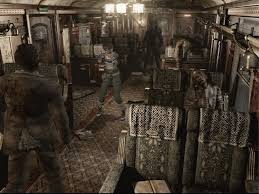
Orginally intended to be released for the Nintendo 64, as the title says it is a prequel to the first Resident Evil. You explore learn more about the history of Umbrella, what happened to Bravo team before Alpha team arrived, and how the T Virus infection spread to the mansion. The introduction of co-operative play between the two main protagonists Rebecca and Billy adds a new dynamic to the game play. Despite being the best graphically in the series at the time of release, it was by this stage that the mechanics of the series was beginning to feel a little samey.
Pros:
* The story- you learn what happened to Bravo team before Alpha team arrived, and before the mansion incident.
* The co-op- allowing you to control and switch characters is different to anything else previously in the series. At certain stages the character's split up, in terms of the direction of the story and puzzle solving
* The train level is one of the best in the entire series, even if it is a little short
* Auto aim, may make the game a little easier but less frustrating
* A lengthy game, two disc
* Infected monkey's- a new enemy that is faster than the hunter's but less powerful
* Fantastic final boss
* Different tones of music- the calming music in the typewriter rooms is always welcome
Cons:
* No item box- most likely introduced to make the game more challenging, and because there are two playable characters at once for most of the game. But it adds nothing, and only frustrates the gamer with pojntless backtracking (only a certain amount of items can be left in one room)
* Aside from the Train, the locations are very generic and rather dull
* Aside from the monkeys, the enemies are generic and unimaginative, seem to be more realistic compared with previous Resident Evil games
Resident Evil 4: (Gamecube, PS2, WII).
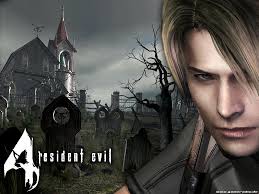
The game that changed it all. Gone were the fixed camera angles and the zombies, now replaced with the over the shoulder camera and Los illuminados. Taking place seven years after Resident Evil 2 and with Umbrella bust, Leon now has to go in search of the President's stolen daughter, where he encounters a cult infected with the Las Plagas. Even eight years after its release this game still holds up well today, it is plenty of fun, the length of the game is huge, there is plenty of replay value. It defines what a video game should be.
Pros:
* Non stop action, there is never a dull moment. The action works because it is enjoyable and diverse, helped by the weapons upgrade system.
* Wide variety of locations, all of which are explorable, and all different to one another
* Vast array of Arsenal- machine guns, sniper rifles, different hand guns, different shotguns
* Weapon ugrade system- you collect treasure to sell as you go along, and you can use this to upgrade the weapons you have. You can upgrade the power, capacity, reload speed, and firing speed in all weapons. Each have up to six levels to upgrade to.
* Variety of interesting enemies- Garrador is one of my faves, as well as the relentless chainsaw guy, and the Las Plagas run at you and attack, rather than slow like the zomibies in previous games
* Very good boss fights and character villains- Krauser and the psychotic midget Ramon Salazar are the best, all provide the player with different tactics to kill them
* The mercenaries mode is very good and enjoyable
* The replay value is better than any of the previous games
Cons:
* Aside from playing as Leon, the game intentionally has very little in common with the previous Resident Evil games, in nearly every single way. From the story to the gameplay
* You have to practically pause the game to get into your item select menu to change weapon
* If you complete the game you can't pass your items over to a new difficulty. Complete it on Normal you can't roll your items onto Professional mode (which is very very difficult)
Resident Evil 5: (PS3, XBOX 360)

A game met with much less praise than 4, in part because it doesn't do anything better, other than the graphics of course. But it is still very enjoyable nevertheless. You play as series veteran Chris Redfield, now a member of the Bioterrorism Security Assessment Alliance (BSAA), who is sent to Africa to apprehend Ricardo Irving, who is selling bio-organic weapons on the black market
Pros:
* Set in Africa, which is very different compared with the other Resident Evil games
* The best mercenaries in the entire series, plenty of characters and maps
* Online play
* You can change your weapon without stopping the game
* Non stop action, not a dull moment
* Improved graphics, make for a more detailed environments and atmosphere
* Along with the inclusion of Albert Wesker as the main villain, the story is related to the previous Resident Evil games far more than what number 4 was
* The return of the lickers
* Plenty of replay value
Cons:
* Sheva- uninteresting character, who also has a very annoying AI
* The boss fights and main villains vary in quality, some are poor, some are okay. None have the impact of those in 4
* Jill Valentine as a villain, when she should have been Chris's partner (as she was in the gold edition)
* After all these years Ozwald Spencer turns up...for less than a minute (fans of the game will know who he is)
Resident Evil 6: (PS3, XBOX 360)

Overblown and over ambitious. A game that tries to be the jack of all trades and ends up the master of nothing. The game sees the inclusion of old character's Chris and Leon, as they try and stop a bio terrorism attack, older characters such as Sherry Birkin and Ada Wong also return. Split into three campaigns, all of which cross over at some point, the game feels disjointed. If it was trimmed down, and with a clearer focus it could have been more than just the average game it turned out to be.
Pros:
* Three campaigns make for a long game- Sherry and Jake's is the best overall in my opinion
* The beginning of Leon's campaign in Tall Oaks resembles the atmosphere of the old Resident Evil's, it also brings back the old slow zombies
* Plenty of action- if you like that sort of thing
* Although overused, some of the QTE (quick time events) moments are pretty special
* Some very good boss battles
* Return of Hunnigan from Resident Evil 4
Cons:
* Too many QTEs, and for no real reason sometimes.
* Too many cutscenes, disrupt the flow of the game
* Locations in the game are not there to be explored but to just look at
* Too many campaigns, developers clearly tried to do too much. Should have just made one, would have gave it greater scope for story
* Essentially an action game and nothing more, which even 4 and 5 most certainly weren't. The lack of variety in the gameplay is a big let down
* Central villain is weak, and only shows up for minimal time
* Replay value is poor, Mercenaries is limited unless you buy it online. And ocne you have completed all three campaigns, you'll be reluctant to return to all of them
Resident Evil 0: (Nintendo Gamecube)
Orginally intended to be released for the Nintendo 64, as the title says it is a prequel to the first Resident Evil. You explore learn more about the history of Umbrella, what happened to Bravo team before Alpha team arrived, and how the T Virus infection spread to the mansion. The introduction of co-operative play between the two main protagonists Rebecca and Billy adds a new dynamic to the game play. Despite being the best graphically in the series at the time of release, it was by this stage that the mechanics of the series was beginning to feel a little samey.
Pros:
* The story- you learn what happened to Bravo team before Alpha team arrived, and before the mansion incident.
* The co-op- allowing you to control and switch characters is different to anything else previously in the series. At certain stages the character's split up, in terms of the direction of the story and puzzle solving
* The train level is one of the best in the entire series, even if it is a little short
* Auto aim, may make the game a little easier but less frustrating
* A lengthy game, two disc
* Infected monkey's- a new enemy that is faster than the hunter's but less powerful
* Fantastic final boss
* Different tones of music- the calming music in the typewriter rooms is always welcome
Cons:
* No item box- most likely introduced to make the game more challenging, and because there are two playable characters at once for most of the game. But it adds nothing, and only frustrates the gamer with pojntless backtracking (only a certain amount of items can be left in one room)
* Aside from the Train, the locations are very generic and rather dull
* Aside from the monkeys, the enemies are generic and unimaginative, seem to be more realistic compared with previous Resident Evil games
Resident Evil 4: (Gamecube, PS2, WII).
The game that changed it all. Gone were the fixed camera angles and the zombies, now replaced with the over the shoulder camera and Los illuminados. Taking place seven years after Resident Evil 2 and with Umbrella bust, Leon now has to go in search of the President's stolen daughter, where he encounters a cult infected with the Las Plagas. Even eight years after its release this game still holds up well today, it is plenty of fun, the length of the game is huge, there is plenty of replay value. It defines what a video game should be.
Pros:
* Non stop action, there is never a dull moment. The action works because it is enjoyable and diverse, helped by the weapons upgrade system.
* Wide variety of locations, all of which are explorable, and all different to one another
* Vast array of Arsenal- machine guns, sniper rifles, different hand guns, different shotguns
* Weapon ugrade system- you collect treasure to sell as you go along, and you can use this to upgrade the weapons you have. You can upgrade the power, capacity, reload speed, and firing speed in all weapons. Each have up to six levels to upgrade to.
* Variety of interesting enemies- Garrador is one of my faves, as well as the relentless chainsaw guy, and the Las Plagas run at you and attack, rather than slow like the zomibies in previous games
* Very good boss fights and character villains- Krauser and the psychotic midget Ramon Salazar are the best, all provide the player with different tactics to kill them
* The mercenaries mode is very good and enjoyable
* The replay value is better than any of the previous games
Cons:
* Aside from playing as Leon, the game intentionally has very little in common with the previous Resident Evil games, in nearly every single way. From the story to the gameplay
* You have to practically pause the game to get into your item select menu to change weapon
* If you complete the game you can't pass your items over to a new difficulty. Complete it on Normal you can't roll your items onto Professional mode (which is very very difficult)
Resident Evil 5: (PS3, XBOX 360)
A game met with much less praise than 4, in part because it doesn't do anything better, other than the graphics of course. But it is still very enjoyable nevertheless. You play as series veteran Chris Redfield, now a member of the Bioterrorism Security Assessment Alliance (BSAA), who is sent to Africa to apprehend Ricardo Irving, who is selling bio-organic weapons on the black market
Pros:
* Set in Africa, which is very different compared with the other Resident Evil games
* The best mercenaries in the entire series, plenty of characters and maps
* Online play
* You can change your weapon without stopping the game
* Non stop action, not a dull moment
* Improved graphics, make for a more detailed environments and atmosphere
* Along with the inclusion of Albert Wesker as the main villain, the story is related to the previous Resident Evil games far more than what number 4 was
* The return of the lickers
* Plenty of replay value
Cons:
* Sheva- uninteresting character, who also has a very annoying AI
* The boss fights and main villains vary in quality, some are poor, some are okay. None have the impact of those in 4
* Jill Valentine as a villain, when she should have been Chris's partner (as she was in the gold edition)
* After all these years Ozwald Spencer turns up...for less than a minute (fans of the game will know who he is)
Resident Evil 6: (PS3, XBOX 360)
Overblown and over ambitious. A game that tries to be the jack of all trades and ends up the master of nothing. The game sees the inclusion of old character's Chris and Leon, as they try and stop a bio terrorism attack, older characters such as Sherry Birkin and Ada Wong also return. Split into three campaigns, all of which cross over at some point, the game feels disjointed. If it was trimmed down, and with a clearer focus it could have been more than just the average game it turned out to be.
Pros:
* Three campaigns make for a long game- Sherry and Jake's is the best overall in my opinion
* The beginning of Leon's campaign in Tall Oaks resembles the atmosphere of the old Resident Evil's, it also brings back the old slow zombies
* Plenty of action- if you like that sort of thing
* Although overused, some of the QTE (quick time events) moments are pretty special
* Some very good boss battles
* Return of Hunnigan from Resident Evil 4
Cons:
* Too many QTEs, and for no real reason sometimes.
* Too many cutscenes, disrupt the flow of the game
* Locations in the game are not there to be explored but to just look at
* Too many campaigns, developers clearly tried to do too much. Should have just made one, would have gave it greater scope for story
* Essentially an action game and nothing more, which even 4 and 5 most certainly weren't. The lack of variety in the gameplay is a big let down
* Central villain is weak, and only shows up for minimal time
* Replay value is poor, Mercenaries is limited unless you buy it online. And ocne you have completed all three campaigns, you'll be reluctant to return to all of them
Subscribe to:
Posts (Atom)
Resident Evil Requiem review (PlayStation 5 version)
Resident Evil Requiem is the ninth mainline entry in the series, and for me it had a lot to live up to as the successor to Resident Evil Vi...

-
Monster Hunter World is the first in the series that I have played, and it was only the extremely positive reviews of the game that nu...
-
Director: Paul Greengrass Starring: Tom Hanks. Barkhad Abdi Running time: 2 hours, 14 minutes A very enjoyable, edge of your seat thri...
-
Sonic Racing Crossworlds is the follow up to 2019s Team Sonic Racing , a good game in its own right but nowhere near as good as Sonic All S...


