Tuesday, 17 September 2019

Control review (PlayStation 4 version)


D1IOd0BWsAAiX5T.jpg


The first two Max Payne titles were the only ‘Remedy’ developed games that I had played, and I loved the first one. The second was a little disappointing, but I was excited for Control since it was first announced at E3 2018. I am always interested in third person, narrative driven games, and Control was promised to have an abundance of it with an additional supernatural element on top. So, it immediately caught my eye before I bought it on its first day of release.


Overall, the game has been a joy to play, it has a level of ambition in both its visual storytelling and gameplay that’s rare to come across in games these days. But it’s flaws and lack of polish stop it from being something truly memorable, after one playthrough I can’t see myself returning to it. The story begins with Jesse Faden arriving at the Federal Bureau of Control’s headquarters, searching for her brother, Dylan, who was taken by them when he was just a child. The FBC are a government organisation that investigates all things to do with the supernatural. As the game progresses you learn that there is more than meets the eye with this secret organisation, as well as Jesse’s connection to it.


On arrival, she finds that a supernatural force called The HISS has been unleashed on the inhabitants inside, infecting anything that it comes across. It is these infected humans that make up the enemies in the game. There aren’t too many enemy types, and from a design point of they are serviceable at best, with some slightly deformed, some that fly in the air, and others that explode as soon as they are killed. The boss battles are far more imaginative, but I‘ll get to them later in the review.  


In order to dispose of these enemies, Jesse gets her hands on the Service Weapon, this is an all-encompassing piece of arsenal, at first it works as a basic pistol, but it can be upgraded with the materials that you have looted throughout the different areas in the game. For example, it can be used as a shotgun, machine gun and a charge gun. All have their strengths and weaknesses; I personally found the shotgun and charge gun to be most effective because the game tends to throw enemies at you in an abundance when you cross their paths.


But my favourite aspect of the combat is the supernatural powers that you get at your disposal. One of these powers allows you to launch objects at the enemies, you can do this with a simple tap of the shoulder button which then levitates nigh on any object within your surrounding area for you to control. This course of action never got boring, and it was the most fun I had in the game. It works because it’s functionally simple and the level of destruction you can cause is phenomenal. There are other powers you can attain as you progress, such as using your surroundings to create a shield, as well as levitating from the ground for short periods of time.


Although it was enjoyable to get these new powers, some of it is hidden behind side content, and the overall upgrade system feels a tad superfluous. Your powers are upgraded by collecting skill points which you gain by completing missions and opening control points. I made the mistake of upgrading each of my powers in an even order, so I’d recommend tailoring to a specific set of skills rather than spread them out. There is also a mod system for your weapons and character, each will have slots that you can put the mods into, for your weapons these will give you extra damage on health or reduced recoil. For your character mods this might mean faster health recovery, shield boost and dodge efficiency, amongst others. You collect these mods in boxes you loot or enemies that you’ve killed. I rather like upgrade and skill trees, but in this game, it feels a little tacked on, especially when the enemies’ level up further into the story. I think it would have been much better if your powers had an extra layer to them rather just being amplified.


Control is a semi open world game, allowing you to explore the FBC headquarters at your leisure, although there are gated locations behind access doors, of which you do gain entry to as you progress through the story. Whether that’s by completing the main or side missions for the support characters. The bulk of the setting is in large office spaces, corridors and maintenance rooms, at face value the dour grey and blue colour palette is a bit uninspired and oppressive, but it fits perfectly with the mood and subject of the narrative. The game has an odd clinical but machinery aesthetic to it that sets it apart from other games. There are moments of wonderful, visual fidelity that standout but it’s unfortunate that a lot of these moments are few and far between.


Unlike other reviewers of the game I didn’t have too much of a problem with the map, sure it could have been better implemented, and it’s a little archaic. But I rather enjoyed the fact that the game doesn’t have a waypoint direction spoon-feeding you the exact position that you have to go in. On various locations on the map are control points that you must activate, this opens the fast travel system. It works for the most part, I felt there was just enough in each location for it to balance exploration and player convenience. They are also the game’s checkpoints, which did cause some frustration for me, because if you die, re-spawned enemies will get in your way as you head back to where you want to be, this was only a big issue when I died during boss battles. 


The boss fights take place in locations that I can only describe as big battle arenas, where little minions will harass you while the big villain is trying to kill you. On the one hand they showcase the game at its most brilliant and imaginative, but on the other they provide some of the most rage inducing moments of my playthrough. One boss was the same colour as the overhead red light that engulfed the room we were fighting in, making the boss hard to see and distinguish from the other enemies. Which was only made worse with the level of combat destruction that clogged up the screen. It’s also baffling that some of the bosses can only be accessed by completing side missions.


The map is chockful of documents and videos to collect, much like the files in a Resident Evil game, these are there to give you a little more lore into the FBC, the enemies you face and the weapons you use. I always appreciate it when games have these included, it shows that the developers have put a lot of thought into their work, and it gives the setting added character and the story more substance. This applies to Control, although I do think there are way too many of them, and they could have been presented in a more interesting way.


Before I finish up, I have to mention the game’s performance on an ordinary PS4. It did not ruin my experience but every time I loaded into a save file the game would chug for a couple of seconds. It happened in some combat situations as well, usually when I was fighting a roomful of enemies. 


In conclusion, Control is the breath of fresh air that I needed after drought of interesting games over the summer, its unique third person gameplay and opaque plot was intriguing. Everything it does it does well, but it’s missing something that elevates it from being a good game to great game. Whether it’s the non-descript side characters, serviceable enemies, and lack of variety in its design, it’s just not quite a definite purchase. I would recommend Control if you are either a fan of third person shooters or Remedy’s back catalogue.


Verdict: 7/10  


Sunday, 1 September 2019

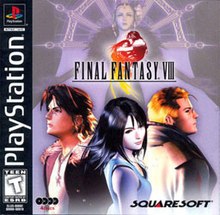
Final Fantasy 8: One of my favourite games of all time

The box cover of the PlayStation version of the game, showing three figures (from left to right a man, a woman, and a man) looking away from the viewer at different angles. The game's logo floats above them, while the background consists of a faded image of a woman wearing an elaborate costume.


I am in the minority of people who consider Final Fantasy 8 to be the best in the long running series. So with the remaster due to be released on the PlayStation 4 on the September 3rd, I thought that it would be a good reason to write about one of my favourite games of all time.


I have a quick confession to make, I am not a big Final Fantasy fan, before and after number eight was released. I liked seven and twelve, but the others just haven’t held my attention for their entire lengths. To the surprise of many, I rather enjoyed thirteen, I think it has the best combat in the entire series, but like the other games, the story just didn’t hold my attention to the end.


So, what makes Final Fantasy 8 so different?


I simply love the setting and characters. The protagonist is a guy called Squall, he’s somewhat dour and a bit of a loner. Someone I could relate to (especially at the time of the game’s initial release when I was in high school); which is a contrast to most videogame characters at the time. He doesn’t really fit into one social group, and it’s not until the latter part of the story that he begins to open and reveal his emotions to those around him.


The beginning of the story and a large section of the setting is based in Balamb Garden, it’s like a militaristic university where students live while studying. It’s an unusual setting that is still rare to find in videogames to this day. I like it because it makes the characters feel like they are a part of something bigger, that connects to the wider world. And unlike a lot of other Final Fantasy worlds, the world in eight is far cleaner and pristine. It’s certainly a futuristic aesthetic, but one that is not overloaded with technology and glitz, and neither is it a fatalistic wasteland on the other end of the spectrum. Overall, the visuals, the world and the character models are more realist compared to those in Final Fantasy 7 and 9.


The side characters vary in design and they are all interesting for the most part, as well as being important to the context of the story, especially when a major revelation takes place in the last third of the game. The characters drive the story forward, they aren’t just reacting to their surroundings, which is not the case with a lot of videogame stories let alone a Final Fantasy game.


You also take control of a character that exists in the past, these come in the form of dream sequences that the protagonist has at random points. Not only was Laguna a character I enjoyed spending time with, but I saw another aspect of the world through his point of view.  


As with all Final Fantasy games, the music is spellbinding, the theme to Balamb Garden is probably the best piece of music in any game that I have ever heard. Listening to its thoughtful and distant melancholy gives me goose bumps and reminds me of more simpler times in my youth.


Unlike its modern successors, Final Fantasy 8 has turn based combat, it’s rather simplistic compared to the latter games in the series. But it makes you approach the combat in a strategic manner, which is the opposite to the combat in Final Fantasy 15s free flowing hack and slash style. Which grew tedious in my opinion.


Final Fantasy 8 is not perfect, few games are. The Guardian Forces battle animations are way too long when you cast them, the story does drag out a little towards the end, and while the latter narrative revelations are imaginative and unpredictable, the execution is not wholly convincing. A few of the supporting cast are not really given much substance within the narrative after their initial introduction.

The villain is interesting for the most part, and it is revealed that she has a deep connection to the protagonist, which adds an extra dimension to the overall plot. But she’s kind of there in the background most of the time, which is understandable because she is just a cog in the protagonist’s overall journey, but she leaves no real impression at the end of the game.


Its been ten years since I last played Final Fantasy 8, and though nostalgia can be cruel, I can’t see the experience to have lessened since. Which was the case when I recently played Shenmue, but I cannot wait to immerse myself in its world once again, and so should you.    

Thursday, 4 July 2019

Crash Team Racing: Nitro Fueled review (PS4 version)

Crash Team Racing Nitro-Fueled cover art.jpg

I love a good kart racing game; of the last two generation of consoles they are the only racers that I have gone out of my way and purchased. It’s not that I don’t like racing games, I tend to just like to play them in a more casual sense. Once I’ve blast through the main single player content, I generally just dip in and out of the online modes from time to time for a short burst of fun.


So Crash Team Racing ought to be right up my street, especially when you consider that I really enjoyed Team Sonic Racing, which I’m still having bags of enjoyment with. But the game has left me a little underwhelmed, it is without a shadow of doubt beautifully crafted with ample amount of content. But for all the fun that it provides, it cannot make up for the many flaws and frustrations I had with it.


I never played the original version on the PlayStation, so I don’t have the nostalgia that a lot of other gamers might have going into the game from the get-go. To start with the good, the game is utterly gorgeous, the cartoony visuals and aesthetics are fantastic and ooze off the screen. The number of racetracks is astonishing and supply the game with plenty of different modes. You have your basic cup races that are four races long, a time trials mode, and a battle mode where you use power ups against other players in one big arena.


And then there is the marquee adventure mode which is a scant story that takes you through each of the racetracks. There are three challenges in each track that you can get through, finish first in a normal race, the CTR challenge where you must find the hidden letters CTR somewhere in the track, and lastly you have the Relic Race. I really enjoyed the Relic Races, you have a small amount of time to finish three laps, but you can collect numbered boxes that pause the timer.


The single player content is quite rich, and like Team Sonic Racing there is also a currency progression system. You earn this currency by taking part in the game’s content, no matter what it is. The more successful you are the bigger the reward. You get to spend this money in the Pit Stop, this is the store where you can buy characters, skins and other special items. The prices might be a bit on the steep side, but if you play the game a fair amount, your reward money swiftly stacks up. Unlike some other gamers I rather like this sense of progression, it’s nice to be rewarded for your effort, and then spend it on what you want, knowing that there is always more things to collect. There are no paid micro-transactions thus far, but I would not be surprised if this was to change at some point, Activision added them into Black Ops 4 not longer after its initial release.    


Away from the single player content, you have the multiplayer online modes, where you can either race against other people or duke out in the battle mode. The netcode has worked perfectly fine from my experience, so I had none of the apparent lag issues that plagued the game when it was first released. 


As with most first-person shooters and fighting games, racing games are my casual fix. As I stated earlier, after completing most of the initial single player content, I generally just play the online modes from time to time, when I’m either bored or just listening to a podcast. The online in CTR is easy to set up and its fun for the most part, but my frustrations begin with the power ups that are too abundant for the players to pick up. It does not help that are way too overpowered for my liking, and influence the flow of a race more than any other kart racer that I have ever played. And to be honest they aren’t that different at face value. You have your usual missiles and boosters, but the impact they have is disproportionate in my opinion. It makes the experience too chaotic and cuts away any rhythm to the action. I am open to changing my mind on this the better that I get at the game, but one of the reasons why I keep going back to Team Sonic Racing is because the racing flows so much better. And the team mechanics make the experience unpredictable but not cheap in its difficulty.


Another issue is the boost mechanic, you will have to master this particular manoeuvre if you want any chance of winning against the rubber banding AI. You must basically hold the drift button on a hard turn and then press the jump button, which then prompts the meter in the bottom right of the screen to fill up. You then have to press the other slide button at the right time to generate a boost. It took me a while to get a grasp of doing this, but I really struggled at first because my timing was never quite right. I don’t have a problem with this mechanic per se, it just feels out of place in what I look for in these types of games. With that said, the controls and feel of the vehicles were generally responsive and perfectly fine.   


In conclusion I just haven't enjoyed Crash Team Racing as much as I'd thought, for the reasons that I have explained, it just hasn’t stuck with me. It’s not that the game is too difficult or technical for what it is, I just think some of the core gameplay components make it feel like too much of a chore just to drop in for the occasional hour or so. Despite my issues with the game I can see why it sits on a 88 score on a Metacritic, although mine would be closer to 70.  


Thursday, 23 May 2019

Team Sonic Racing review (PS4 version)

Team Sonic Racing Cover.jpg


Team Sonic Racing is an absolute blast, and so much fun to play. It’s the follow up to Sonic & All Stars Racing Transformed from 2012, which was a great game on its own terms. This will be the only time I will make a comparison to Mario Kart, but the two come from similar DNA. In that both are relatively simple, arcade games that are easy to pick up, with very little complexity to them. Which is what I personally look for in a racing game.


As the title suggests, the game has one ace up his sleeve that makes it unique and different from its competition, and that is its focus on team dynamics. Each race will have four teams of three, and the aim is to still win by each member finishing as high as possible, thereby getting higher points at the end. But to do so you must work as a team by trading items and building up your ultimate meter, which gives you the best power up in the game. For example, instead of wasting a power up if you are in first place, you can offer it to another member of your team. The power ups are a bit dull to be honest, it is your typical boost and firing projectiles that you'll pick up. I wish they would have made the power ups more closely attributed to the characters themselves.

I was a bit sceptical of this new direction, but it works perfectly and adds tension to the races, as well as an element of tactical thought that is missing from other games of the genre. The team aspect of the game also works wonders in the online multiplayer races, it makes for an unpredictable and infuriating experience, but in a good way.

For those who want something more familiar, there is an option to play most modes as a solo racer. But be aware that the game is stripped of its chaotic fun and design nuance in the process.

There are twelve characters and twenty-one tracks in total. The characters are entirely taken from the Sonic franchise, so aside from Sonic and Tails, you have the lesser known Silver and Rogue, amongst others. The roster is a bit of disappointment to be honest, I find it baffling that characters from Sega’s large IP catalogue were not included. The racers are split into three different classes, speed, technique and power. Speed and technique are the easiest to use, with the slower power classes the hardest to master.


You can customise your vehicles with the credits you are rewarded with, you use these to open mod pods that give you random skins, paint palettes and car parts. These are basically loot boxes in all but name, but don't worry, there are no paid micro-transactions here. There is a lot to play around with, far more than I anticipated, so I pretty much redesigned every character's default vehicle at some point.   


The racetracks are good for the most part, they are multi layered with twists and loops, much like the levels in a modern Sonic game. With that said, although they are visually elegant, they do look reasonably similar to one another because there are a set of four tracks within the same locale. Much like the character roster, I think it would have been so much better if they had created tracks from other Sega IP, it feels like a bit of a missed opportunity.


Overall, there is a decent amount of content, the basic stuff you might expect from a racing game, with a grand prix mode with three difficulty levels, normal, hard and expert. The game is not difficult once you have a grasp of things, even on expert mode it’s not overly challenging, which is another minor negative that I have towards the game. There are time trials for each track, where you can try and beat your own best times and those that have already been set by the game. The multiplayer online mode has team racing as well as solo races, you can take part in both casual and ranked modes. As soon as you have joined a lobby you get the choice of picking from four tracks, whichever one is picked the most is chosen for the race.

Finally, there is the Team Adventure mode, which has a bare-bones story that is nothing to rave about. In the simplest terms, an alien called Dodon Pa asks Sonic and his friends to come and race on his tracks. It really isn't worth going into the details of the plot, but you will get to experience all the tracks and extra challenges on offer, most of which will have a timer attached to them. The mode is best used as a tutorial, I would recommend starting the game from here. The further you progress the more difficulty levels that you will unlock, and I found it more challenging than the grand prix mode.


Team Sonic Racing is a bundle of joy, and there is a layer of depth that you don’t often get with these types of games. But it is not an excellent game, which is a shame because it could have been with more ambition in its character roster and track designs. And while there is a decent amount of content for what you are paying for, it is nothing more than my minimal expectations. But this last point is just a minor gripe that I had. So in conclusion, I would certainly recommend buying this game, the engaging team mechanics and customisation extras are worth it alone.


Verdict:
7.5

Tuesday, 14 May 2019

Mortal Kombat 11 review (PS4 version)


Mortal Kombat 11 cover art.png


Mortal Kombat 11 was not a game I planned on buying on the first day it was released, over the last year I have tried numerous fighting games to get my kicks from. This has especially been the case since my play time on For Honor has drastically declined in the last six months. Aside from a brief month or so with Dead or Alive 6, most have not held my attention for too long, for various reasons that I have written about in a past blog post.

So I went into Mortal Kombat 11 through sheer hope that it would be different, and I'm pleased to say that it's one of the best fighters I have ever played, and I think it's going to keep me pleased for quite some time yet. Before I get onto the main body of my review, I'd just like to say that aside from a brief moment on my brother's copy of MK9, I have not really played a game in the franchise since the second entry on the Sega Mega Drive. I played it round my baby sitter's house, and I liked it without the urge to want my own copy. The violence was a bit nice at the time, and the fatalities were clever (I could never pull them off). Although Tekken would eventually become my favourite fighting game, Mortal Kombat always stood out from the competition by having unique looking character designs that were realist but fantastical at the same time.

And this is still the case with the latest entry, MK11 certainly has one of the best character designs of any fighter that I have ever played, and to top it off, they each have a unique fighting style. The moment to moment combat is a simple, old fashioned 2D left to right gameplay that's not overly complex, with a relatively slow pace at its core. I like this because it makes the fights more streamlined and tactical, you are not just reacting to your opponents next move. For new players there is an extensive but easy to understand set of tutorials for each character, that I found extremely helpful. Basic combos and special moves are fairly easy to pull off, but pulling off a combo chain can be tricky, especially if you are playing on harder difficulties or against a decent online opponent. I struggled to use the D-pad initially, which you will have to use because of the game's 2D design.

Like all fighting games there are characters that could do with some balancing, as well as those that have cheap move sets. But on the whole, the game is one of the better balanced fighters that I have played in recent times. A newly introduced 'Fatal Flaw' feature has changed the dynamics of the combat in a small way, it's a move you can use if you are down to the last quarter of your health. It's like a mini version of a fatality, if you pull it off it you can take away about a quarter of your opponents health. There is a part of me that really likes this because it makes the fights more tense, especially when it's close. But there is the other half of me that hates it because it gives bad and cheap players a lifeline they do not deserve. It is also the only part of the combat that reminds me of other fighting games on the market.

The twenty five character roster is impressive, they all have similar control configurations for their special moves and combo chains, but they play vastly different from one another. All of whom have their own pros and cons. After a while, I get to the point in most fighting games where there is only a few characters that I actually like playing as. To my surprise I like using nearly every character in MK11, I do have my favourites of course, but it's been fun learning to master the entire roster.

Old favourites such as Raiden, Liu Kang and Scorpion return amongst others. With new characters Frost and Geras joining the lineup. There is a nice blend of fantastical comic book type fighters, as well as those that are more grounded, which in turn gives you some imaginative fight stages. The game is visually elegant in all departments, with no hit box flashing clogging up the screen.

There is plenty of content for a fighting game at launch, there is an elaborate story mode that does not feel tacked on, which is too often the case with other games of the genre. To give a brief summary of the plot, we begin in a future where the main characters of the franchise have turned evil. Raiden kills Shinnok to protect Earthrealm, so his mother Kronika, the keeper of time tries to change this by interfering with time. This then creates anomalies that bring young versions of the characters into the future where they have to take on their older, eviler selves. It's all schlock but rather entertaining. The story plays out like one big cinematic movie with different narratives intertwining between characters, and an occasional fight that you have to take part in.

Then you have the Konquest towers, where the meat of the content is. You have the classic arcade towers that you have to get through to reach the final boss, Kronika. But then there is the Towers of Time, these towers are a different kind of challenge, and provide the bulk of the game's reward and grind system. Your opponents will now have particular abilities that you have to overcome, for example some will have improved fireballs or a move that turns the whole screen black.

There are three kinds of currencies that you will be rewarded with when you complete these challenges. There are the gold Koins that are the most abundant, as well as Hearts and Soul fragments. All of these are used to open chest boxes of a varying kind in the Krypt. The Krypt is Shang Tsung's Island, every inch of it is full of these boxes to open. In these boxes are a range of random loot and cosmetics such as character skins, intros, augments, concept art, etc. The more expensive the box you open, the bigger the reward. I really like this idea but the execution is a bit flawed to say the least. It feels like a level within itself, with varying secrets to uncover by using items you have earned in the main game. There is also something slightly addictive about not knowing, but wanting to be rewarded with the currency you have grinded.

But there are just too many forms of currency, to have three feels convoluted and rather unnecessary, and it makes the progression feel like a mobile game. To be fair the game has been patched since its initial release, making the progression less egregious. But I still cannot help but think that it was designed in such a way to at least entice the player for monetary reasons.

Which brings me to the character customisation, where the execution is once again flawed and convoluted. You have your standard skins and abilities to toy with, but there are also augments that can be attached to your weapons, that give you specific upgrades. It's a great idea in theory because it provides an incentive to master one specific character at a time, but it just ends up feeling like busy work, and a tad superfluous. However, I can see why this might be different for players who want to play the game in the online ranked modes.

To sum up, Mortal Komabt 11 is an awesome fighting game that really took me by surprise, I have been having a blast with it. Aside from borrowing a few balancing issues that drag down most games of the genre, and a convoluted progression system. It is an absolute must buy for any fan of the genre, or someone who is looking for a competitive online experience.

Verdict:

8/10


Saturday, 20 April 2019

The Division 2, the good and the bad (PS4 version)

The Division 2 art.jpg


I thoroughly enjoyed 2016s The Division, it was the first online focused game that I really dug my teeth into. I had initially played it on my brother’s XBOX One, and it was one of the reasons why I chose to purchase a PS4 after a bit of a hiatus from gaming.


Despite some obvious flaws that I won’t go into here, The Division was a fun cover based, third person shooter, with an added loot grind on top of it. I spent countless hours playing with friends in the main missions, as well as the broken but rewarding Dark Zone. Like Destiny, the moment to moment gameplay was engaging and joyous. The feel of the weapons was great and the bullets hit the target with a lot of weight and impact. The weapons might have looked a bit too similar to one another but you were always rewarded with better loot the further you progressed. The best thing about the game was that you could tailor your gear and skill loadout to way you wanted to approach the game.


So I’d been looking forward to The Division 2 since long before it was even announced, and I purchased it on day one. I’ve now completed the base game and experienced most of the endgame content, and my feelings are a bit mixed to be honest. It’s a better and more polished experience than the first game, but it doesn’t go beyond what I expected, and it doesn’t match the fun that I had on my first experience playing through the first Division. Which is understandable in some ways, because your first experience with a particular series will be more impressionable compared with a sequel that’s better but fundamentally the same.


I’ve decided to do this review in a different way, one, because I’d like to just get to the point and narrow down my positive and negatives. Two, because the game is still evolving as I write this, seeing as it is an online service game. So I’ll state the good and bad, starting with the bad on this occasion.


The bad  


Artificial difficulty


The enemies can be really clever, and they are certainly far more challenging than those in the first Division. Not only do they flank you but they are relentless once they have you in sight.  Despite all of the frustration I’m glad this is the case, however, the difficulty can feel extremely cheap and artificial. There are a couple of enemy types that feel unbalanced, I’m thinking of baton wielders who sprint and kill you within one or two hits, as well as armoured enemies who sprint at you with a jack hammer, like the baton enemies they can kill you in matter of seconds once they get hold of you. This isn’t helped when the enemies don’t generally react when you’re pumping bullets into them, and they have a knack of spawning from nowhere. Which makes it hard to react if you’re in the heat of a fire fight (especially if you’re in a bad team).  


This isn’t helped with the general clumsiness of the player movement, the cover system is perfect when you’re on the offensive but it’s a bit lacking when you have to retreat. Particularly if you’re in a position where there’s no immediate cover to get behind.

The story:


The story in the first Division game was hardly enthralling or even original, but its execution was at least interesting, and the characters you met were worth listening to. I just can’t say the same for The Division 2, I got to the point where I just didn’t even bother to take much notice of what was going on. This problem is further exacerbated by the stripped down connection you have with the base of operations. In the first game the base of operations was integral to the progression. In this game it’s still the place that you have to customise your character, but little else. With that said, having The White House as the base of operations was a great idea.


Repetition and telegraphed mechanics:


Although this point will be countered by one of my positives, the game’s gameplay mechanics eventually get repetitive. You gradually begin to notice a pattern in the way the missions and the enemies playout. The enemies will flank and duck out of cover at a precise moment in a certain way. For all of the game’s fun and thrill, after the initial opening of the game I couldn’t play the game for more than an hour or two at a time. Which is evidence that I liked the game, but I could play the first game endlessly and never get bored. With The Division 2 there came a point when I was playing it out of obligation rather than any form of investment.


Clunky UI and bugs:


These are minor issues I had compared with my other negatives, but the game quite frequently takes a while to load in properly when you spawn into the map. Causing the environmental textures to have a bizarre water palette look to them, as well as bad pop in.


The user interface is not the best, but it’s in no way detrimental to the experience. I just think there could have been a more cohesive way of layering the different gears together, and a better way of dismantling useless gear you don't need.


The Good:


The game is exhilaratingly fun, especially in a group:


Although I have complained about the artificial difficulty and the repetition, the game is still an absolute blast. The missions are far superior to those in the first game, and the locations are far more expansive. The weapons hit with real impact, and the shooting is excellent on the whole. The game gives you a lot of agency by allowing you to build your character with the weapons, gear and skills that suit your playstyle.   


While some of the side missions are a bit hit and miss, the main missions and strongholds are excellent. Playing in a full team is extremely gratifying, this is especially the case if you’re in a good team that coordinates together (this doesn’t have to be over group chat). The game goes out of its way to make sure that players use the environment to take on enemies in their own unique way. On higer difficulties this only works if you’re in a team that is at least competent, otherwise you're in for a struggle.


Plenty of endgame content that’s good:


For a live service game, The Division 2 has plenty of content to get through, from the base game to the endgame content. I won’t spoil anything but a new, tougher enemy faction comes along once you have completed the base game, and it just makes a lot of the repeated content you’ll go through a bit more immersive. There is an abundance amount of new loot to pick up too.


While Washington DC is full of content that feels a bit like filler, the main missions are great, and the strongholds will keep you busy for quite some time. Since release, new content has been dropped, and Ubisoft plan on dropping more in the near future.


And let’s not forget the Dark Zone, the PVP area, and where you can get a ton of gear. To be honest I haven’t really delved too deeply into it, but there are three of them, rather than just the one which was in the first game. It’s added content that you might want to explore if you’re up for something different.


Interesting map:


The first game was set in New York City, which was good but it began to get a little stale the further into the game you progressed. The Division 2 takes place in Washington DC and it provides a more suburban locale. This has allowed the missions to be a bit more immersive and multi layered compared with the streets of Manhattan. The first game often felt like a corridor to corridor shooting gallery, in this game the bigger environments make it an imperative to play with some form of tactical awareness.


Although the game is not particularly pretty in the visual departments, it’s a treat to explore and blast your way through historical locations such as the Lincoln memorial, the Capitol building as well as the Washington Monument. The overall setting feels much grander on this occasion.


Final Thoughts:


The Division 2 is a bittersweet experience, although it’s bigger and better than its predecessor, there are flaws that don’t make the overall package nearly as fun. The core gameplay loop is thrilling but becomes a little monotonous, and the game’s difficulty makes it far less enjoyable playing solo. If you enjoyed the first game then this is a must buy, but be aware that this is more like a reboot than a proper sequel.

Sunday, 10 March 2019

Captain Marvel review

Captain Marvel poster.jpg

Directors: Anna Boden & Ryan Fleck
Running time: 124 minutes
Certificate: 12A


Captain Marvel is set in the mid 1990s, so it's a somewhat prequel to the other Marvel Cinematic Universe movies, it's also the first to be led by a female character. Centred on Carol Danvers (Brie Larson), who's a member of an elite force of Kree warriors. When a mission to rescue an intelligence operative goes wrong, she is captured and her memories are probed by a group of Skrulls, a shape shifting alien race that the Kree are at war with. She manages to escape but crash lands on Earth, or Los Angeles to be more precise. Where she comes to the attention of government agent Nick Fury, and the remaining Skrulls that landed along with her.

In many ways Captain Marvel is a rather by the numbers superhero movie that happens to revolve around a character who has a form of amnesia. There's nothing about it that's particularly memorable or compelling. The action scenes are entertaining but rather passable, there's little in the way of tension when someone is so powerful, so any form of set up has no pay off. It's visually well made but not distinctive enough to really set its mark when you put it alongside other superhero movies, let alone on its own merits.

I did like the sense of adventure and urgency in the plot, all of the characters had clear motivations, and the action was driven by all of this. And to be honest the plot is rather serviceable, which wouldn't be much of a problem if there was an emotional connection to Carol Danvers. Brie Larson is a fine actress, and I thought the character became more sympathetic towards the end of her story arc. But the performance is just lacking a spark that guides us through the narrative, and there's not much in the way of character development by the end of the movie. This isn't helped with the flashbacks that we see of her past, while they explain her motivations they're short scenes lacking any kind of meat to them. So they just come off as a bit two dimensional.

The surrounding cast elevate what is an otherwise serviceable script. Samuel Jackson is as good as ever as a young Nick Fury, even if his character has gone from being serious and imposing in the previous MCU entries to a laugh a minute comic relief in this one. Jude Law is impressive as Yon Rogg, who is Danvers mentor and commander. And Ben Mendelsohn adds layers and a sense of empathy to the Skrull villain, Talos.

The movie doesn't really add much to the wider MCU timeline, its connection to the recent Avengers: Infinity War is pretty minimal, but it's worth waiting around for the post credit scene that does link the character to present events. The character might turnout to be more interesting within a wider ensemble of heroes, but her powers are not particularly well defined at the moment, and she's probably a bit too powerful for my liking. Every superhero needs a flaw or a weakness, and Captain Marvel doesn't really have one that I can speak of.

Overall this is a mid range MCU movie, it's perfectly competent and entertaining but lacks the heart to really string something together that's more than the sum of its parts. It's still worth the ticket price, especially if you're a fan of superhero movies.

2.75/5

Resident Evil Requiem review (PlayStation 5 version)

Resident Evil Requiem is the ninth mainline entry in the series, and for me it had a lot to live up to as the successor to Resident Evil Vi...