Sunday, 30 September 2018

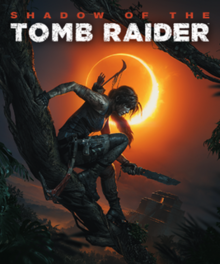
Shadow of the Tomb Raider review

Shadow of the Tomb Raider cover.png

Shadow of the Tomb Raider summary and review


I absolutely loved the 2013 Tomb Raider reboot, until that point I had only been an on and off casual fan of the series. I’d played the groundbreaking first title, but It wasn’t until Tomb Raider Legend was released in 2006 that I really got my hands on another title in the series, which was the first to be developed by Crystal Dynamics rather than Core Design. I played the subsequent Anniversary and Underworld, which I liked without really loving either of them.


With the changing state of the games industry and the brand in dire need of being relevant again, the developers took a bit of a hiatus to change things up. Although it might lack in certain areas of what we’d expect from a Tomb Raider game, and the emphasis moved further into the action genre, as a package I thought the reboot worked wonders. The exploration was great, the platforming always intuitive, and the combat was fun and rewarding.


The sequel, Rise of the Tomb Raider was more expansive with a semi open world, as well as a richer upgrade system. Overall it was a more than worthy sequel, hampered slightly by its meek story, wasted early Syria section and the overall locale nowhere near as interesting as the first game.


So now we have Shadow of the Tomb Raider, the last in this reboot trilogy of Lara Croft’s pseudo origin story. On the whole I thoroughly enjoyed the game, in comparison with the others it represents the best and worst of the trilogy.


This will not be like the majority of my reviews, I will instead narrow it down to what I liked about the game and where things could have been better, because there’s only one minor aspect of the game that I out and out didn’t like.


The good:


Raiding tombs is pivotal:


One criticism you could lob at the 2013 reboot was the fact that the tombs were optional for the most part, this didn’t change much with the sequel, although the tombs were woven into the locales far better. Shadow’s has the best of both worlds, there are plenty of optional tombs that you can explore as part of the progression. While the narrative that drives the story forward is set within contained environments that require a lot more puzzle solving.


Combat takes a backseat, compared with the last two it’s surprisingly sparse, and when it does occur, it focuses far more on stealth. You can go all out, guns blazing but you’ll only make it harder for yourself.


The stealth is serviceable, it’s pretty basic but effective. Lara now has the ability to cover herself in mud and hide within the settings foliage, you can then kill off enemies with the simple press of one button when they are close-by. The kill animations are quite entertaining, but the stealth does the job and not much else.


The environments are incredible and interesting:


The game is set in two locations, beginning in Mexico and then to Peru for the vast majority of the game. Like the two previous games in the series, the locales are rich in detail and elegant to the eye. While there is no breathtaking individual moments like the first time you saw the Mongol ship hanging from the frozen waterfall in Rise. But overall I would say that Shadow’s has the most alluring, intriguing setting in the trilogy. There is a far more diverse range of topography, as you’ll explore the underbelly of a dark and atmospheric jungle, to climbing along sunlit vistas.


In the past two games the settings never really had a location that was brimming with life, none felt like places that people had lived in. Shadow’s changes this in two ways, first, the game begins in a small Mexican town where the day of dead celebrations are taking place. It’s only a short section but it’s a situation we haven’t seen in this reboot trilogy. Secondly, the biggest hub in the game, Paititi, is a little more packed and filled with human life.


Platforming is the best it has ever been:


With the combat taking more of a backseat, the exploration has a bigger role, with the platforming as good as it has ever been. At heart, right from its birth two decades ago, Tomb Raider has always been an exploration game, traversing its level design has always been the highlight. And the same is no different for this game, using the pick axe or the bow to get from one place to the next is still intuitive and a joy to do. All of the tools from the previous games return with the inclusion of a rope ascender that allows you to pull down from higher reaches. It’s hardly a game changer but it gives the platforming a little more immersion, especially when you consider that the tombs are far better this time around. I also have to applaud how agile Lara is to control, the feel of the character has the perfect balance in weight and movement.


Where improvements could have been made


The story is weak, and Lara’s characterization is inconsistent:


The stories in the reboot trilogy are good on paper but mediocre in execution, and I think they have gradually got worse with each entry. The first game masked a lot of these issues because there was a sense of urgency as the whole plot unfolded, seeing as you were in the shoes of an inexperienced and stranded Lara. In the background was also the pursuit of a mythical Japanese queen that gave the narrative a bit of gravitas.


In Shadow’s, Lara is in pursuit of Trinity (a secretive organisation that steals ancient artefacts), and she ends up having to stop an impending apocalypse. The story just never really feels convincing, so it’s hard to ever get invested in it.


The characters are even more of a problem, and they have been from the beginning of the trilogy. Jonah is the only one aside from Lara who has appeared in each game, and to be fair he’s a sympathetic character whose had a bigger role in each subsequent game. He is Lara’s moral guidance, a wrench on her recklessness, he also appears to be the only confident in her life, so the chemistry between the two works really well.


But Lara is a bit of a paradox in this one, in the earlier games, particularly the first one, she had a certain innocence to her. I sympathised with her despite the fact that you kill countless amounts of in-game enemies. But in this version she is entirely in pursuit of selfish needs, the opening section of the game in Mexico is a perfect example of this. There is also an uncomfortable rambo type moment at one point, that felt out of place not only from a gameplay point of view, but it precedes in an awkward moment of brutality.


Although she gradually grows as a character, it’s really hard to care for her, and she’s kind of unlikable for the majority of the story. The ending implies that she has learned from her mistakes, but I think it’s a little unfortunate that the developers too often reduced her to a two dimensional, action hero archetype.


The gameplay is sometimes far too scripted:


It might just be that I have seen the series do the same old tricks before, but there were far too many scripted setpieces in this one, and outside of one particular moment in Mexico, all of them are boring. As I said, this wouldn’t be too much of a problem if we hadn’t seen them done to death in the previous games.


The game’s pacing is a little all over the place, and I’m not just talking about the plot. Having gone back to the previous two games in the trilogy, it’s noticeable how much you could play for long stretches without any interruption to the flow of the game, and this includes the story. When its at its absolute height, Shadow’s has some of the best moment to moment gameplay in the trilogy,  but there is far too many interruptions to the game that grinds it to a sudden halt. On too many occasions it felt like the game was playing me rather than the other way round.


The skill tree feels superfluous:


I won’t dwell on this too much, but not only is the skill tree ugly but its actual impact on the game is minimal, by the end only about two or three skills I’d upgraded felt like they had any impact. Which is a shame because I thought the skills and upgrade system in Rise was not only user friendly, but it got the right balance between making the upgrades noticeably impactful, while giving the player a certain level of agency in the way that they wanted to approach the game.


The skill tree isn’t helped by the sparse combat in the game, which is why I find it baffling that you have four weapon slots. As much as I loved the focus on platforming and exploration, the game could have done with a bit more moment to moment action that didn’t include forced stealth.


The bad


The final boss:


So bad I really don’t want to go into the details.


Final word:


If you liked the previous two games in the series, Shadow of the Tomb Raider is a must buy, despite its flaws it’s still a damn, good game. I’d rank it third in the trilogy, only just behind Rise. It certainly left me the most conflicted out of the three games, it’s also one of the few games of this generation that I have an urge to play for a second time. Just to see if I come away with different feelings on the experience.


In regard to the future of the franchise, I’m stuck in two minds, because there’s a part of me that would love to see this Lara Croft return, and see her go onto more adventures. But at the same time I know a more interesting character can be created, either way I hope a new Tomb Raider isn’t too far into the future. I’d like to see a more bright, vibrant setting, perhaps in Egypt or India. While the reboot trilogy has been visually impressive, a lot of it has been quite grim and dark to say the least.  


Monday, 17 September 2018

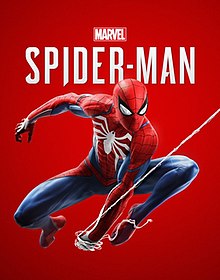
Spider-Man review (PS4 game)

Spider-Man PS4 cover.jpg


Spider-Man is one of the few Superheroes I’ve ever had much interest in, there’s something about the struggles of Peter Parker that relate to me more than a vigilante billionaire or a super powered king, or alien. He has a certain humility that we can all relate to, so I ought to have been really excited for this game, but I was kind of ambivalent to the whole thing.


It was only closer to the release that I decided that I wanted to buy it, and I’m glad I did. After a brief introduction at the start, you are immediately thrust onto the streets of New York, swinging seamlessly from one building to another. This brief moment captures so much of the fun of the game, not only is the open world of New York city brilliantly realised, it’s fun to effortlessly traverse through.


For me an open world game lives and dies on how engaging it is through the agency it gives its players. And while Spider- Man does in many ways steal all of the typical tropes from the genre, it actually makes the setting immersive and the overall package utterly fantastic.
Set years after the death of Uncle Ben, we are thrown into a world where Spider Man is an already established hero, this is no origin story. Much like the comics, Peter is a good natured person who is just trying to get through life, in this interpretation he is working for Otto Octavius as a lab assistant.


The plot twists and turns along the way, but without going into spoilers, the driving thrust of the story is set around a group called ‘Inner Demons’, they are led by a villain called Mister Negative, and it’s basically up to Spider-Man to stop them from terrorising the streets of New York. Throughout the story you will encounter many familiar faces within the Spider-Man lore, from Jonah Jameson, Aunt May, the Osborns, Mary Jane, amongst others.


All of the characters live up to their namesake, fulfilling new and surprising roles within this alternate Spiderverse. Jonah Jameson as an Alex Jones type pundit for a news network is a particular highlight. The characters are generally outstanding and lift up what is an otherwise decent if unremarkable story. The relationship between Mary Jane and Peter is a real highlight.


The open world is dotted with activities alongside the mainline campaign, with newer challenges and side missions unlocked the further you progress in the story. It will feel immediately familiar to anyone who has played any open world game in the last decade. Completing side activities exist to gain XP and tokens that you use to upgrade your skill tree, your gadgets, as well as all new suits. The amount of extra suits really took me by surprise, my personal favourite was the Homecoming suit from the Marvel Cinematic Universe.  


The collectables are not a chore to get through and add depth to the experience. They come in two forms, the first are backpacks which give you items from a time in Peter’s past. Aside from giving you upgrade tokens, they have no effect on the gameplay, and work the same way the artefacts work in the new Tomb Raider games. A voiceover from Peter will come on when you pick them up, to give them some expository context. The other collectable activity is taking photos of landmarks that are placed around the city. These are a mix up of real life locations such as the Empire State building and others that are set within the Marvel lore, like The Daily Bugle for example.


A lot of the story missions try and tempt you to use stealth to get through areas littered with enemies, you can do this by using your webs to get from one place to the next in the same way Batman used his grappling hook in the Arkham games. But it’s nowhere near as good because the environments were far more contained in those games, and Batman had a lot more environmental gadgets at his disposal. I rarely went down this route too often, and that’s because I enjoyed the combat quite a lot.


The combat leans heavily towards counter attacking, with combinations playing a pivotal role when you’ve made a dodge. Even with the upgrades and skills you gain, it can get slightly repetitive, but it’s always intuitive and fun because of the abundance of moves and gadgets you have to experiment with.


While the game is never too challenging, the enemies gradually get trickier the further into the game you get. They tend to attack in numbers and generally do a decent amount of damage if you’re not careful, so there’s no spamming one button to victory in this game. The only real gripe I had with the combat was the camera, Spider-Man moves so fast there’ll be times when the camera can’t keep pace, so you’ll end up with an enemy getting a cheap hit on you.


The story campaign has the best content, like so many open world games it’s the meat of the experience while the side missions are filler to supplement your progression. But it’s not all good in regards to the campaign, there are small segments of forced stealth missions where you’ll be controlling another character such as Mary Jane or Miles Morales. There isn’t too many of them, and they do allow you to see a different perspective within the plot. But they're generally bland and severely grind down the pace of the game, leaving them feeling a tad out of place.


There are puzzle segments within Otto Octavius's lab, some of these are optional but they are compulsory at certain points in the campaign. I really enjoyed them in small doses, some were real brain scratchers, but the game hits you over the head with far too many of them all at once. Another slight nag are the boss battles, while cinematic, none are particularly memorable and a lot of them rely too heavily on quick time events and waiting for the villain to telegraph their attacks.


Outside of the story and side activity, there is also a photo mode that will keep you busy. New York is visually stunning and realistic, while retaining its own Marvel identity that we’re so familiar with from the comics as well as the movies. As someone who has been to the city several times, the level of detail and lighting took my breath away, the beautiful vistas above the cityscapes is truly inspired. So there is plenty of opportunities to take selfies and share them online.


In a year full of exemplary games, Spider-Man has been the most fun and entertaining one out of the lot. It’s an open world game that not only rewards exploration but it allows the gameplay mechanics to interact and flourish along with it. It’s not flawless, and I think it’s just shy of being truly great, but the ending left me wanting more, and really looking forward to the direction the inevitable sequel takes. This is an absolute must buy for any PlayStation 4 owner, if you miss out you’ll have passed up on something truly special.


Verdict


4.5/5


Wednesday, 29 August 2018

Shenmue revisited

Shenmue series logo.png


I asked for Shenmue as a Christmas present the year it was released, 2000 to be precise. It was heavily hyped at the time because of its supposed innovation. I had only ever seen screenshots in magazines, and with no Youtube at the time I had little to go on in terms of its actual gameplay mechanics. But it still interested me nevertheless, it was also clear that martial arts would play a crucial role within the game, and I was heavily into all things martial arts at the time.


To make sure that my mum got me the game, a few days before the big day I found out where all the presents were hidden. So I looked through the big, black bag where it was being kept, and to my relief, it was there alongside one of the Harry Potter games.


Given the acronym, F.R.E.E (full reactive eyes entertainment), Shenmue was something of a revolution at the time, with its night and day weather cycle, its semi-open world, and non playable characters that seemed to live their own daily lives.


I instantly fell in love with the game once I got my hands on it, I was completely immersed in the world and the story that unfolds as you play, as well the combat and quick time events that were thrilling to take part in. I must have completed the game at least four or five times, even to this day it’s not often I come across a game that hooks me in such a way.


With the Dreamcast dead, I mistakenly got rid of my Shenmue disks, and I have always wanted to go back to the game. I genuinely thought it would never happen because buying a second hand Dreamcast with the game is fairly expensive. But my luck changed, with Shenmue 3 on the horizon, there was demand for a port of the first two games. A demand that became reality when it was announced that they were to be ported to the current generation of consoles.


I was obviously ecstatic but a little wary, I would once again get to replay one of my top 5 favourite games of all time. But, how well would the game hold up to my current standards of gaming? With all of my doubts and expectations out of the way, I recently bought the Shenmue bundle with both games for £22.49 on the PS store.


So have my expectations and doubts been met? Yes and no is the short answer. Shenmue is unquestionably still an immersive experience that brings back a lot of childhood nostalgia for me, but if I take my nostalgia glasses off, I have to admit that it has many problems that hold it back, problems that were far easier to ignore nearly two decades ago.


Despite being semi-open world, at heart Shenmue is an adventure game set in 1980s Japan, with a blend of other genres mixed in. The game is heavily driven by its investigative narrative as you go in search of Lan Di, the Chinese man who killed your father in front of you. So there is a lot of going here, going there, talk to this person, wait to go talk to this person. And in-between that you have some exploration and combat to get through, including a rather difficult but enjoyable forklift racing section.


Let’s begin with the positives, the game still hits me emotionally, the music is subtle but always engaging. While the world is small, and rather bland when you compare it to modern game settings, It still pulled me in and it made me feel like I was living in a real place, and one that I would want to visit. There are so many little nuances in the world that poke at your immersion, no matter how dull it can be.


While the lead character Ryo Hazuki has little in the way of personality, the supporting characters are really interesting, and elevate what is an engaging but otherwise lightweight story. There’s not too many of them, but the quick time events that the game pioneered at the time, are intense and cinematically choreographed. Every time you complete a sequence, you really do feel like you’ve accomplished something.


The voice acting and script writing is objectively bad, and it might be really off putting for some, but I actually think it’s funny and gives the game some charm. It has the impact of one of those badly dubbed Hong Kong movies from the 70s and 80s.


With everything said, even as a huge fan of the game, it has unquestionably dated in a lot of ways. This is to be expected for a game that was trying to do something that had never been attempted before, from both a technical and conceptual point of view. The game could be best seen as a prototype to other games that came after its release.   


Aside from the obviously dated graphics (which don’t take any heart away from the game), the combat is serviceable at best, the controls while given an update are still cumbersome. Although they aren’t terrible and you’ll eventually get used to them.


While the locations have their charm and character, they are rather mundane and you’ll quickly get to a point where you’ll have nothing left to discover.


But the biggest issue I had on replaying the game was the abundance of free time that you have from one plot progression to the next. There are points in the game where you’ll have to meet someone the following day at a certain time, leaving you with nothing to do of any great substance. You can lose yourself in the in game arcade where you can play darts or the classic Space Harrier, but that won’t keep you busy for too long.


This is just one example of where the game’s ambitious realism holds back its pace in a bad way. For first time players this might not be such a big issue, but it just made me feel disengaged.


After nearly two decades, I’m glad I went back to Shenmue, it is still one of my favourite games of all time, simply because of the wonderful first time experience I had with it. It leaves me excited for Shenmue 3, which has now been given an August 2019 release date.


If you have never played Shenmue 1 and 2, I’d recommend giving them a try for the price that it’s being retailed at. For a decent price you have two games with a hefty amount of content. However, make sure you know what you’re getting yourself into, so I’d recommend you watch snippets of an early walkthrough on the internet. Despite its glaring flaws, Shenmue will leave you with an experience like no other.

Wednesday, 15 August 2018

Reflecting back on Mad Max (the video game)

Cover art featuring protagonist Max Rockatansky and his Magnum Opus

Back in April of this year, Mad Max was one of the games that was free with the PS Plus subscription. It was a title I'd always taken a look at but never went over the line to purchase, it wasn't the price because you can get it for under £10 in most places. I think it was the repetitive nature of its open world, a genre that I had briefly grown tired of at the time.

I like open world games as much as the next person, I certainly like them more than I would have if you asked me five years ago. But I'd become a bit bored of them, it was one of the reasons why I never warmed to Horizon Zero Dawn, and why I never completed Assassin's Creed Origins. But with the game still in my library at the beginning of June, and with nothing else to play, I finally jumped in, and boy am I glad I did.

I finished the game over a two week period, and I have been meaning to write this blog since, but I've been busy with other things in my life. But on reflection, the game is still fresh in my mind.

Mad Max is not too dissimilar to what you might expect in an Ubisoft game. There is a big map which is divided up into different sections, in these sections there are a truckload of collectables to chase, enemy bases to ransack and beat through, with the customary mini games included, such as racing.

In terms of its presentation, the open world in Mad Max is a bit of a deviation from the norm. This world is no urban sprawl full of skyscrapers and wonderful beaches, this is a post apocalyptic landscape that has been devastated by the remnants of nuclear bombs. The map is big and rather sparse of anything to really explore, what could be the game's weakness is actually its strength. This world is full of sandstorms, damaged terrain and abandoned signs of life that existed in a world that was long gone. One of the collectables you pick up are old photographs of places and people, these are littered around the map, and create a sense of depth to what is an otherwise threadbare plot.

To get across this barren world, you have a car that is essential to the game, you have to upgrade it to progress further in the story, and upgrading your car is by all accounts the focus of the game. At face value it isn't anything we haven't seen before, but the vehicle controls are probably the best I have ever played, nothing has quite come close to the thrill of blasting my way across the landscape in this game, or breaching an enemy camp while using a rocket launcher or a harpoon that is attached to your car. It really is bags of fun.

The combat is the other aspect to the game that I found myself completely immersed in. Although you get a shotgun, ammo is rare to come across, and the gunplay is secondary to the hand to hand fighting for the most part. The combat is based on the Arkham games, which I'm not a big fan of. But unlike the Batman games where the combat system is created to make the player feel powerful and the combos look cinematic, in Mad Max, while the combat has been designed to feel cinematic, it's nowhere near as floaty and derivative.

And unlike the Arkham games, the combat can be difficult to master, counter punching and blocking play a pivotal role. The enemies will generally try and surround you, and then attack in numbers. The camera has a tendency to not keep pace with the action, so you'll have plenty of moments where an enemy will suddenly appear from nowhere and get a cheap shot on you, It's only a minor negative nevertheless. Your combat skills can be upgraded just as your vehicle can be, this will involve the usual video game tropes of improving your hit power and health bar, but they do genuinely mix up the action for the better.

While you will be in the same fights with the same enemy types over and over, the combat was absolutely delightful.

The game does have its problems, as I stated earlier, the gameplay loop can be very tedious, the mechanics are pretty solid, but there's no doubt that some people might get bored or rather disengaged with the whole experience. It doesn't help that the story is threadbare, until the last stages of the game, the narrative is pretty much non-existent. Although I wish there could have been a better plot to drive the game, it didn't stop my overall enjoyment, the world was extremely immersive, and so much of the subtle details like the collectable photos nearly made up for it.

All of these are just little problems that I had with the game, but my biggest problem was the controls and the invisible walls. Controlling Max can at certain points feel like a real slog. I understand what the developers were going for with the realistic feel to the game, especially when you consider the kind of setting you're exploring. But I just wish that Max was just that little bit more agile, just so it didn't feel like I was getting a delayed response from my controller. 

In conclusion, Mad Max ended up being somewhat of a hidden gem for me, I generally think it's a little underrated. A game that was probably released at the wrong time, and one that didn't quite change up the formula for a lot of critics. If I were to score it, I'd give it a respectable 7/10, it's good game that really lacks a narrative foundation that could have lifted it higher.

If you missed the PS plus free copy, you can get a second hand one for real cheap. So I'd recommend giving it a try, especially if you're into your open world, Ubisoft type games. 

Tuesday, 31 July 2018

The good and the bad of Massively multiplayer online role playing games


Until recently I have only ever really dabbled in Massively Multiplayer Online Role Playing Games, and I’ve watched others play them with a careful eye. But I’ve never stuck to any of them for more than the introductory first few hours. Those I tried are Elders Scroll online, Star Trek online and DC online, and I have watched at first hand people play Warcraft and City of Heroes.


I have always wanted to get into Warcraft but I’ve never had a PC that could run it, and last summer I had the sudden urge to play an MMORPG. For some reason I wanted a game that could give me a richer experience than those I was playing at the time, which is where I discovered Final Fantasy 14. I had heard of it before, but for whatever reason I took little notice of it, probably because no one I knew was playing it.


But from what I'd read and seen, it looked like a good alternative to Warcraft, and I was able to play it on my PlayStation 4. So I bought the base game and expansions all on one disk. After a solid month of playing, where at one point I kind of became addicted, I stopped playing because although the experience was enjoyable for the most part, it eventually became unfulfilling for several reasons.


I’ve been wanting to write this blog for a while, and I only just recently returned to the game for a fleeting moment, hoping that perhaps I might find something that wasn’t there before. But I’m still getting the same feeling I was when I first played it, and I can’t see myself holding out for long, but we’ll see.


So in this blog I write down some of the good and bad points that playing an MMORPG gave me. Although this is drawing a lot from my experience of playing FInal Fantasy 14, I think it can also be applied to others as well.


The good


  • Plenty of content:


Role playing games are generally quite meaty in terms of length, it’s one of their appeals, and that is no exception for massively multiplayer ones. With the online functions included, the amount of questing and side activities is breathtaking. The questing is linked with not just the story, it’s also linked with levelling up, grinding, hunting, as well as crafting.


The social aspects enhance the content as well, there’s one thing playing with strangers, but playing with friends can add a lot of laughter as well as tension. It also helps that you can coordinate your way through dungeons much easier.


  • Social


MMORPGs can be a great way to meet new people, the chances are you’ll be on a big server with thousands of active players. There are great ways to meet new people running dungeons or raids. But the best way to meet new people is by joining or setting up a guild or free company (which is the case in Final Fantasy 14).


These are places where a set of players can be part of the same community, in a free company you can share the same house. In the house you could have your own room and decorate it how you want, as well as sharing and storing items with your fellow players.


It allows the player have a sense of belonging in the world instead of it just being a passive background to the game’s narrative.


  • Progression that’s organic and diverse


You can create your own character from the beginning, and you'll also be able to pick a character class you wish to play as. For example you might have the choice of playing as a healer, a tank or a damage per second role. This is just an example from my experience, different games will have different roles that you can choose from, but there should be a choice of picking a role that you’ll enjoy best. In Final Fantasy 14 I played as an Archer, a ranged DPS.


As you progress you’ll be able to customize your character in even further ways, this can be both in the way that you fight in combat and the way that your character looks. From experience, Final Fantasy 14 is fantastic at doing this.


  • A place of being


As I said previously, a good MMORPG will suck you into its world and make you feel like you’re living in another alternative reality. There are downsides to this which I’ll get to later, but the possibility of striking up virtual friends with other people, and creating your own little virtual home can be really addictive and fun at the same time.


The world can be a very grim and depressive place, and all forms of entertainment are an escape from it. An MMORPG has so much to escape into and become an actively involved participant, rather than just being passively involved for short term gratification.


The bad:


  • Tedious questing and grinding


On face value, having loads of content is a good thing, as long as the content is of good quality and the grind is worth the reward. From my experience, MMORPGs are a mixed bag. Nearly everyone one I have played has moments of inconsistent quality in terms of questing. Be prepared to have to do plenty of fetch quests of going here, delivering this, go here and talk to this particular person. A lot of it can get very tedious and feel insubstantial in terms of game-play agency.


Some people will like this, but I’d often come away from a session of playing Final Fantasy 14 and wonder whether I actually did anything that I really enjoyed. You’ll find that a lot with the genre, they are addictive but not particularly fun for long sections of your play time.


  • Time suckage


To get the best out of an MMORPG will require a lot of dedication, especially if you’re playing catch up having come into the game late, as I did. This can be a problem because you might find yourself exploring locations with very few other players, and having to wait a long time for other players to join you when you want to go through an early dungeon.


Because the games in the genre are designed to be addictive, they have a way of hooking you in, no matter how much little or to no enjoyment you're actually are having. There’s always a relentless amount of content to drill through, of course you have the choice not to pursue all these endeavours, but if you don’t the games can make you feel like you’re not getting the best experience.


  • Toxic communities


As with any online game you'll get people who are absolutely toxic, and by that I mean people who will needlessly either gloat or abuse a particular mechanic in the game. Gloating in certain games is okay, some even encourage it, such as For Honor. In MMORPGs, the toxicity comes when you’re a running a dungeon. Because each player will have a class that has a particular role to fulfil, other players might criticise you if you’re not playing to their standards.


On some occasions they will try and help you, which is always nice, but more often than not they will flatout abuse you, and I’m talking swear word abuse. For new players this might stop them from playing the game, it certainly had that effect on me for a short time.


There are also players who aren't social when it would be best if they were, for example when you join a guild or a free company (which are more or less meant for the purpose of creating a community), there will be players who will not take part in any of the social activities, or simply refuse to communicate with anyone else. This issue is a minor gripe that I have because I’ve not always wanted to be chummy with other people.


So should you play an MMORPG?


If you like doing tedious quests but want to feel like you belong in another world for a potentially rich experience, MMORPGs could be just for you. It comes with its caveats as I have outlined in this blog. If you have never touched one but you've always been curious, my advice would be to try one when you have nothing to play and little in the horizon that you’re interested in. The same way that I first started playing Final Fantasy 14.


The gaming scene at present is quite dry until September, so it’s the perfect moment to get stuck into Final Fantasy 14 for a month or so. If you play for just an hour or two each day, it should be enough time to let you know if you want to stick with it.


Resident Evil Requiem review (PlayStation 5 version)

Resident Evil Requiem is the ninth mainline entry in the series, and for me it had a lot to live up to as the successor to Resident Evil Vi...